Physical Address
304 North Cardinal St.
Dorchester Center, MA 02124
Physical Address
304 North Cardinal St.
Dorchester Center, MA 02124
Your Go-To for Digital Advice
Your Go-To for Digital Advice

Cryptocurrency isn't just digital money; it's a wild ride fraught with risks and emotional highs and lows. Parents need to guide their kids through this digital jungle, starting with open, honest conversations.

By Richard / December 2025. I’m not someone who panics. My mates joke that I’m always laid-back—my wife says I’m never in a hurry (I’m always on time, I just don’t leave early). But when my daughter started hearing about crypto from her friends, I went into the same mode I use when I’m pulling apart a microwave to see why it broke: understand the system first, then fix the problem. This guide does exactly that.
What you need to know:
Cryptocurrency headlines have moved out of the financial pages and into your child’s social feeds, gaming chats, and school conversations. Terms like “Bitcoin,” “crypto wallet,” and “blockchain” pop up before you’ve had a chance to understand them yourself.
The real concern is that young people are actively being targeted. Influencers promise quick riches. Apps make trading feel like a game. Friends share “secret methods” that supposedly make money overnight. Meanwhile, actual scams disguise themselves as legitimate opportunities.
My dad was an engineer. He taught me early on that if you don’t understand how something works, you’re vulnerable to it. Crypto is exactly that kind of thing. So here’s my breakdown—not to scare you, but so you actually get it.
Cryptocurrency is purely digital money. There are no physical coins or banknotes. Everything exists as computer records.
Unlike traditional money issued by central banks, most cryptocurrencies are created and managed by networks of computers spread around the world. These networks use something called cryptography (which is just very complex math) to secure transactions and keep records on what’s called a blockchain—essentially a shared, permanent database that records who owns what.
Bitcoin was the first well-known cryptocurrency. Since then, thousands of others have been created: Ethereum, Dogecoin, Ripple, and countless others. Some are serious attempts at alternative money systems. Most are experimental, niche, or short-lived.
Here’s the critical bit for parents: most cryptocurrencies don’t behave like everyday money. They behave like extremely high-risk investments. Prices can swing up or down by 20–50% in a single day. That’s not normal for currency.

TikTok videos, YouTube shorts, and Instagram stories show people (real or performing) talking about crypto profits. A video shows someone claiming they turned £500 into £5,000. It’s fast-paced, exciting, and—crucially—it focuses entirely on wins.
The loser’s story never gets told. The people who lost money don’t post videos. All your child sees is the highlight reel, and it creates a false sense of “everyone is making money except me.”
Some games use in-game currencies that look and feel like crypto. Some platforms now promote NFTs (digital collectibles) that can be bought, traded, and sold on external marketplaces. To a young person, the line between “fun game currency” and “real-world investment” gets very blurry.
This blurring makes it easier for scams to hide and harder for parents to notice when a harmless hobby turns into high-risk spending.
Teenagers pass around tips: “This coin is going to the moon.” “This app gives you free crypto.” “This influencer has a method that actually works.” When a classmate claims to have doubled their money, fear of missing out kicks in hard—even if the story is exaggerated or won’t last.
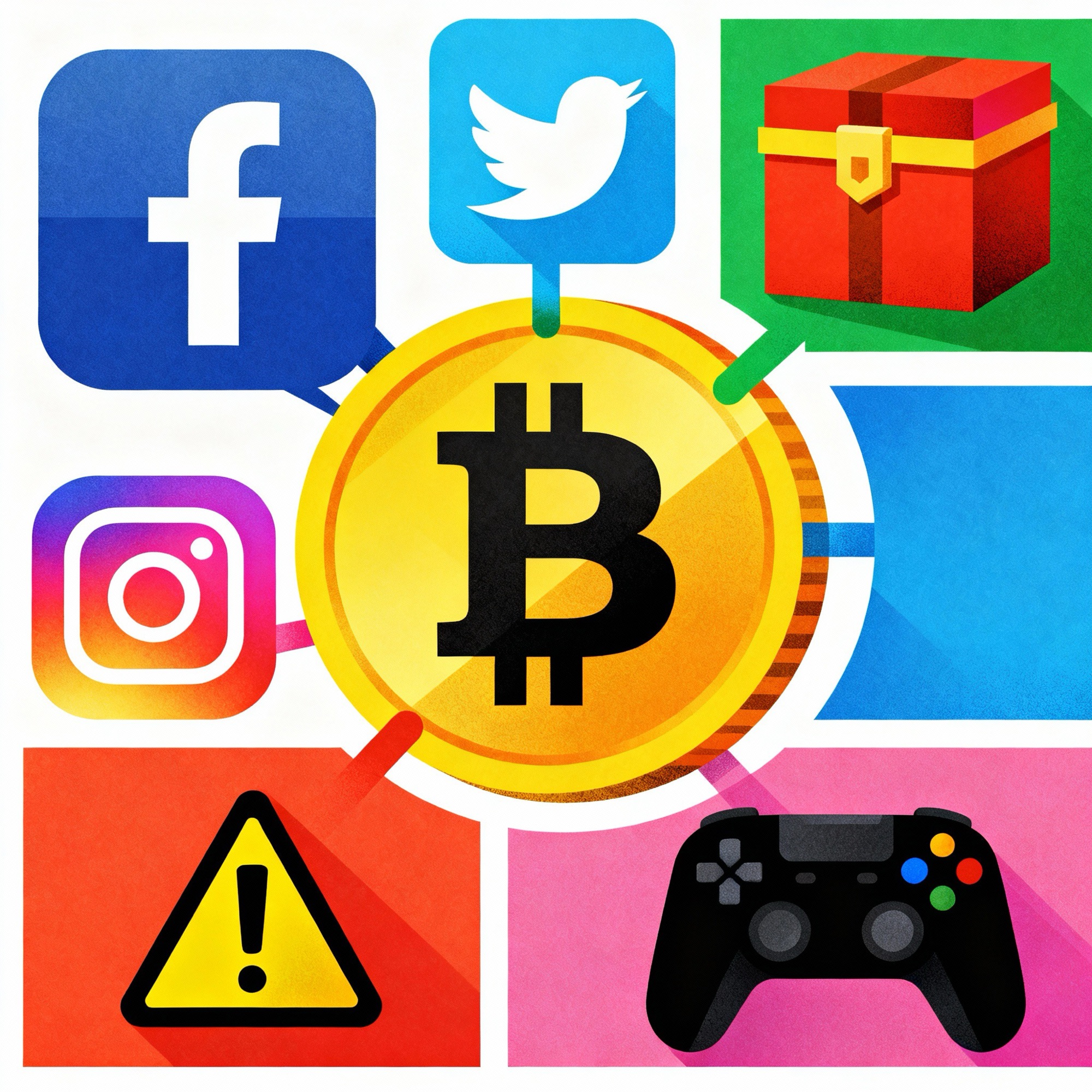
In the UK, US, and most countries, adults can legally buy and trade cryptocurrency. But most platforms require you to be at least 18 and verify your identity.
That means your child isn’t supposed to open an account in their own name. If they’re trading, they might be using an adult’s details, prepaid cards, or less-regulated overseas services. Each route carries extra risk because protections are weaker.
From a tax perspective, governments now treat crypto as a financial asset, not currency. Profits are taxable. Companies promoting crypto face stricter rules about how they present risks.
The takeaway: crypto is not a toy or grey area. It sits squarely in the world of real financial regulation and real consequences.
Crypto prices can move by 10–50% in a single day. For an inexperienced young person, that’s not investing—it’s a rollercoaster that encourages panic-selling when prices drop and gambling-like excitement when they rise.
Losing money early on can be genuinely traumatic for a teenager. It can damage their confidence around money for years.
Because crypto transactions are hard to reverse and identities can be hidden, scammers love this space. Common tricks:
Young people trust online personalities and are slower to spot red flags. Once money is sent to a scam wallet, it’s almost impossible to recover.
Opening accounts, joining exchanges, and using new apps all mean sharing personal data. Teenagers often reuse passwords, skip security steps, or share screenshots that expose sensitive information. These habits create long-term risks far beyond the immediate crypto activity.
If your teenager mainly hears stories about overnight millionaires, education and steady work start looking pointless. They may chase high-risk opportunities constantly, believe luck matters more than effort, or undervalue savings and building actual skills.

Limit who can add cards or payment apps to devices. Use parental controls to require your approval for any purchase. On shared devices, enable strong authentication.
Many trading apps are designed to feel like games. Disable in-app purchases where possible, or require a password for every transaction.
Unique passwords for every account. A password manager for older teens. Two-factor authentication on any financial account. Yes, it feels like overkill. It’s not.
For example: “You don’t send money or invest online without checking with me first. You never share ID documents or bank details via messaging apps—not even if it looks like your friend asking.”
If your child has already been scammed or lost money: Focus first on understanding what happened and making sure they’re safe. Then you can address the financial side. Don’t shame them. Ask questions. Learn together.
Revisit these rules as your child grows and as laws and technology change.
That depends on your family. Before even considering it, ask yourself:
For most households, the safest path is to treat crypto as a topic to study, not a product to buy. Teenagers can research blockchains, follow price charts, and analyze case studies of scams without risking real money.
If any of these appear: don’t send money, don’t share details, and talk to a trusted adult immediately.
The crypto world moves fast. You don’t need to understand every new coin or keep up with every trend. Instead:
That habit of checking in with a trusted adult is more protective than any specific technical knowledge.
What is cryptocurrency in one sentence?
Digital money managed by computer networks instead of banks, whose value swings wildly and which is often promoted to young people by influencers.
Is crypto safe for children?
No. Cryptocurrency is designed for adults and carries high risks: extreme price swings, scams, data privacy issues, and emotional damage from losses. Young people usually lack the experience to handle these risks.
At what age can a child learn about crypto?
Children can start learning basic money concepts in primary school. In early secondary, they can explore how blockchains work and analyze real case studies of scams—without buying anything.
Should I let my teenager invest in Bitcoin?
For most families, no. If it happens at all, it should be with tiny, supervised amounts they can afford to lose entirely. Crypto should never replace sensible savings or education about how actual wealth is built.
How do I spot a crypto scam?
Guaranteed profits. Pressure to act fast. Requests to keep it secret. Demands for money up front. If you see any of these, it’s a scam. Don’t send anything and talk to a trusted adult.
My child lost money on crypto. What do I do?
First, stay calm and reassure them that mistakes happen and you care more about their safety than the money. Ask questions without judgment. Review how it happened, spot the warning signs together, and agree on new rules to prevent it happening again.