Physical Address
304 North Cardinal St.
Dorchester Center, MA 02124
Physical Address
304 North Cardinal St.
Dorchester Center, MA 02124
Your Go-To for Digital Advice
Your Go-To for Digital Advice
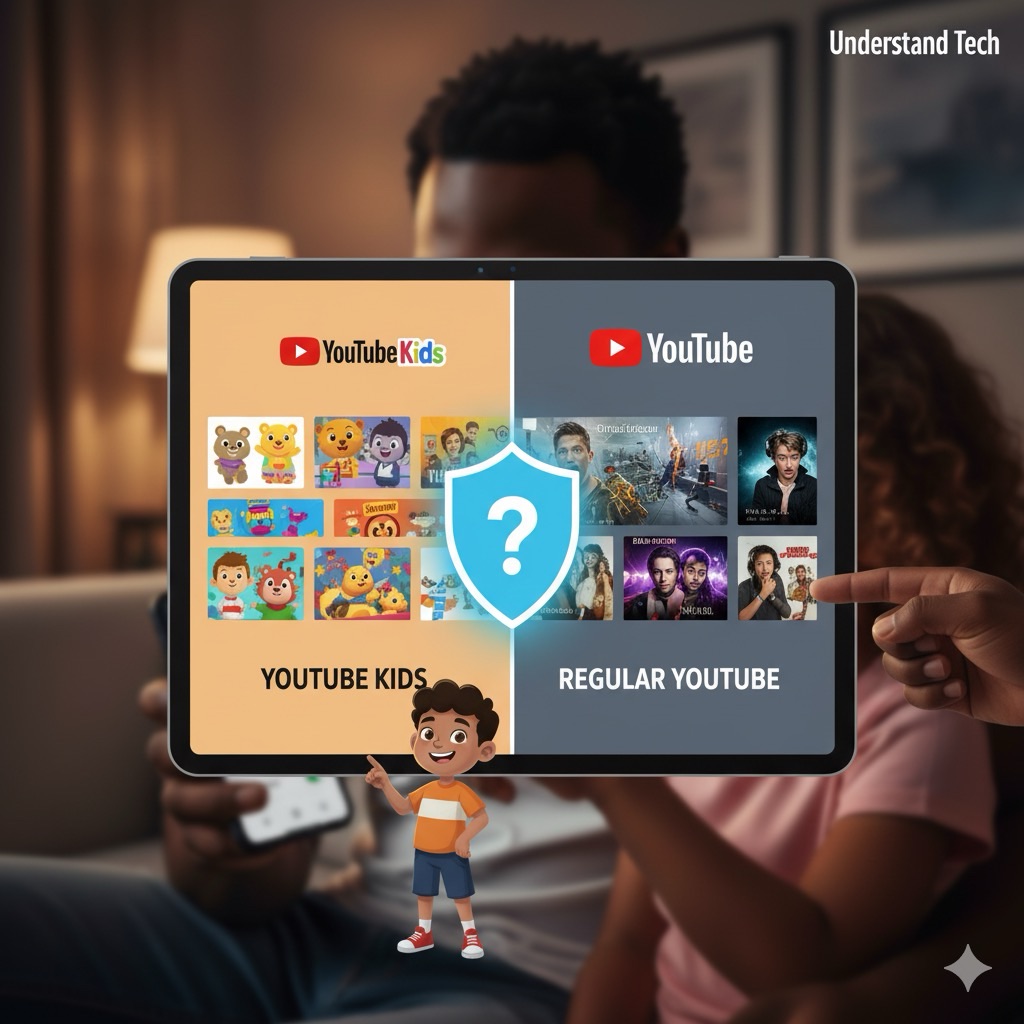
YouTube Kids vs YouTube: Complete safety comparison for parents. Parental controls, content filtering, age restrictions explained. Which is safer for your children in 2025?
By Richard / December 2025. For many children, YouTube Kids is a walled garden. It is safe, curated, and designed for them. But eventually, every child asks to switch to “Real YouTube.” This is not just an app update—it is a digital cliff edge. At Understand Tech, we believe parents need to know exactly what they are unlocking. The issue is not just “inappropriate content”—it is the sheer scale and psychological design of the platform itself. This comprehensive guide breaks down what changes, why it matters, and how to navigate the transition safely.
What this guide covers:
To understand the risk, you have to understand the difference in design. YouTube Kids is a separate app designed specifically for children aged 4–12. It offers a simplified interface, no comment sections, and limited social features. Every video has been reviewed—either by YouTube’s AI system or by human moderators—to ensure it meets family-friendly standards.
Crucially, content on the Kids app is divided into three strict age-based tiers:
Regular YouTube, by comparison, is an open platform where over 500 hours of video are uploaded every minute. That is roughly 7.2 million hours of content uploaded every day. While all content on YouTube Kids technically exists on the main app, on the main app it sits right next to content that is unmoderated, scary, or simply not meant for children.
⚠️ The Reality Check: Research published in 2025 shows that over 90% of children aged 7–12 use regular YouTube, not YouTube Kids. By age 9, only 24% still have YouTube Kids installed. By age 12, it drops to just 6%. Children abandon the Kids app long before reaching their teenage years—often without their parents realising the implications or understanding what the transition actually means.
| Feature | YouTube Kids | Regular YouTube |
|---|---|---|
| Content Moderation | AI-reviewed + human moderation | Community-flagged only |
| Autoplay | Can be disabled by parents | Enabled by default; very hard to disable |
| Comments | Disabled for most content | Visible; can include hate speech, predatory behaviour |
| Ads | Family-friendly only | Targeted ads; can include gambling, dating apps, etc. |
| YouTube Shorts | Not available | Infinite scroll; highly addictive |
| Search | Limited to pre-approved content | Unrestricted; can lead to adult content |
| Watch History | Recorded; parents can review | Recorded; but easier for kids to delete |
| Parental Controls | Built-in; very straightforward | Available but require active setup; complex |
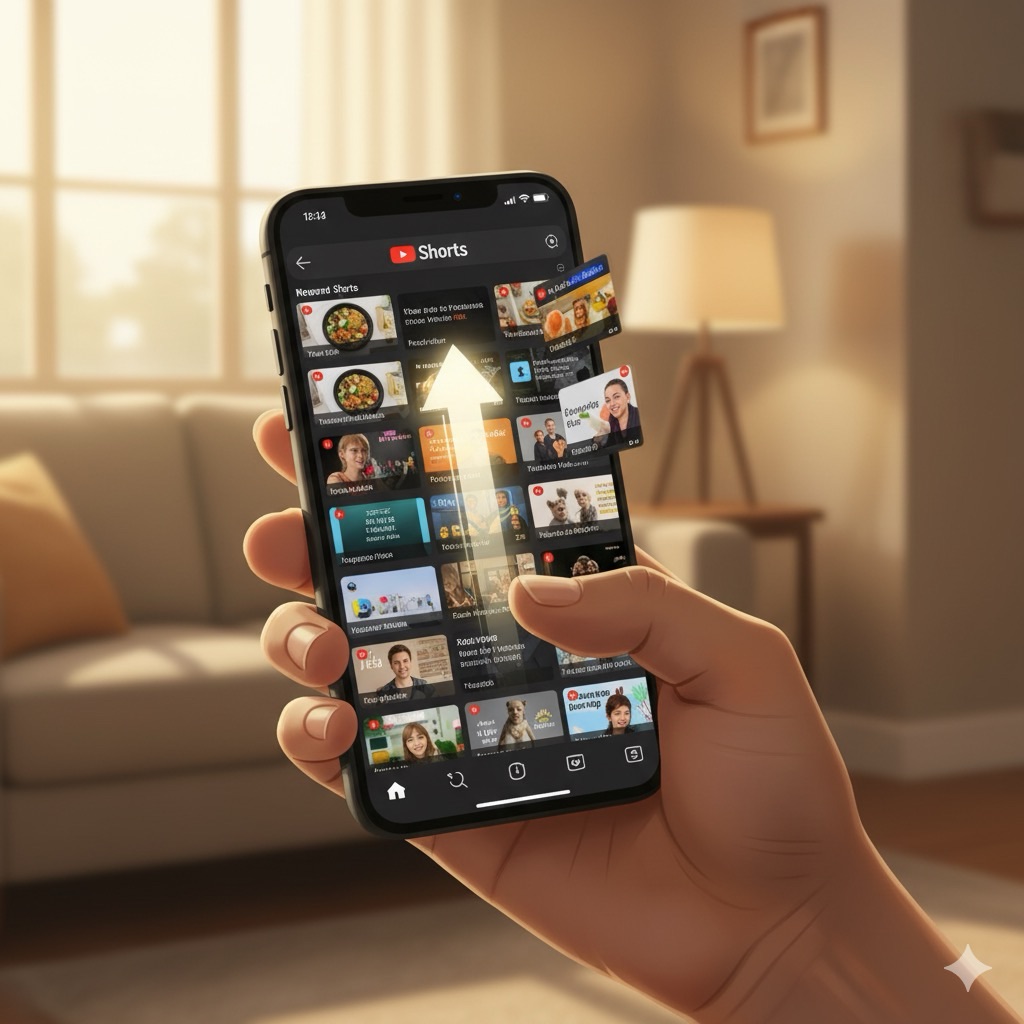
The biggest danger on regular YouTube is not just a specific video; it is the format. The “Shorts” shelf uses a psychological mechanic called a Variable Reward Schedule—the exact same principle used in slot machines, gambling, and social media feeds designed to maximise addiction.
YouTube Shorts are vertical videos lasting 15–60 seconds, displayed in an infinite scroll. Each swipe delivers a new piece of content—some funny, some boring, some shocking. The brain cannot predict what comes next, so it releases a small hit of dopamine with every swipe, creating a compulsive loop. This is not accidental design; it is engineered addiction.
The key psychological trick: unpredictability. If every video was the same quality, your brain would adjust and stop releasing dopamine. But because YouTube’s algorithm mixes great content with mediocre content randomly, your brain stays engaged—always hoping the next swipe will be the next viral video.
A 2025 study published in Frontiers in Human Neuroscience examined over 400 adolescents and found that those with short video addiction (SVA) showed measurable changes in brain function:
Dr. Jeffrey Barkin, a psychiatrist specialising in adolescent brain development at Johns Hopkins, describes short-form videos as delivering “repetitive dopamine hits, much in the same way that cocaine does.” The difference? Cocaine is illegal and regulated. YouTube Shorts are free, legal, and available 24/7 on every device. Your child’s brain responds the same way to both.
Children aged 8–14 are particularly vulnerable because their prefrontal cortex—the part of the brain responsible for impulse control, long-term planning, and risk assessment—is still developing. It will not be fully developed until age 25. This means that when a child is exposed to addictive design on YouTube, their brain is literally not equipped to resist it. They are not being “weak-willed”; they are being neurologically outmatched.
The “Predatory Tactic” Risk: Some creators manipulate titles or use popular characters (like Mickey Mouse, Peppa Pig, or Huggy Wuggy) to bypass YouTube Kids filters, making inappropriate videos look safe to click on. A video titled “Learn Colours with Elsa!” might start innocently but transition into frightening or unsuitable content halfway through. YouTube’s AI filters are not perfect, and human moderators cannot review every video uploaded. Studies show that roughly 8–12% of content that should be age-restricted still slips through the cracks.
On YouTube Kids, the autoplay feature is disabled by default. On regular YouTube, the next video plays automatically within 10 seconds. This removes the friction of choice—children do not have to actively decide to watch another video; it just happens. This small design choice dramatically increases watch time (YouTube data shows it increases engagement by 40–50%) and makes it harder for children to stop.
From YouTube’s perspective, this is genius. From a child development perspective, it is exploitation.
The commercial experience is also fundamentally different. On YouTube Kids, advertisements are reviewed and tailored to ensure they are family-friendly. Marketing for toys, games, and children’s products is common, but it is regulated—no predatory marketing tactics, no gambling, no diet products.
On Regular YouTube, ads are targeted based on browsing history, search data, and demographic assumptions. This means children may see:
The psychological impact is real. Research shows that children exposed to targeted advertising show increased rates of anxiety, impulse buying, and body dissatisfaction—especially girls aged 10–14.
✓ Understand Tech Tip: YouTube Premium removes ads entirely on both platforms (£12.99/month for families), which eliminates one layer of risk (marketing pressure) immediately. For families with children transitioning to regular YouTube, Premium is genuinely worth the monthly cost for ad removal alone. It also disables autoplay on Shorts, giving children back the friction needed to pause and reflect.
Theory is one thing. Real life is another. Here are four parent stories from families we have worked with:
The Situation: Emma asked to switch from YouTube Kids because “everyone at school uses real YouTube.” Her parents agreed, set up Restricted Mode, and monitored for the first week.
What Happened: Within two weeks, Emma was watching Shorts for 2–3 hours after school. She started discussing videos at dinner that her parents had never heard of. Her screen time tracking app showed spikes at 10 PM (well after bedtime). Her sleep deteriorated noticeably.
The Turning Point: Emma’s mum noticed she was becoming withdrawn and anxious. When they reviewed her watch history, they saw mostly fashion and beauty content—intermingled with algorithmic suggestions for diet content. Emma was developing body-image anxiety.
What They Did: They turned off Shorts entirely (using an app called YouTube Vanced), disabled autoplay, and instituted “Screens off by 9 PM” in the house. Within one week, Emma’s sleep improved. Within two weeks, her anxiety reduced noticeably. Emma is still on regular YouTube, but now with strict guardrails.
The Lesson: The first few weeks are critical. Even if everything seems fine, watch carefully for changes in mood, sleep, and behaviour.
The Situation: Kai switched to regular YouTube aged 10, ostensibly to watch gaming content. His parents felt confident because they had enabled Restricted Mode.
What Happened: Kai clicked on a video titled “How to Beat Level 5 in Game X” which appeared in recommendations. The video started normally but transitioned into animated inappropriate content halfway through. Kai watched the entire thing before realising what had happened and closing it.
What They Did Right: Kai felt safe telling his parents immediately. Instead of punishing him, they reviewed how it happened, discussed what he saw, and reframed it: “This is not your fault. Websites are designed to trick both kids and adults. Thank you for telling us.”
What They Changed: They switched to YouTube Premium (removing ads and reducing algorithmic manipulation), set up a Supervised Account with “Explore” mode, and started watching videos together 3–4 times per week.
The Lesson: Restricted Mode is not foolproof. Multiple layers of protection are necessary. And if something does happen, keep communication open—shame and punishment only make children hide things.
The Situation: Zara transitioned to regular YouTube age 11 and became obsessed with Shorts. She would watch for hours, her grades dropped, and she started refusing to go out with friends.
The Realisation: Zara’s parents realised this was not normal teenage behaviour—this was addiction. She would put her phone down and immediately pick it back up. She felt anxious when separated from it.
What They Did: They implemented a full digital detox: no YouTube (or any social media) for two weeks. Zara was miserable. But after one week, her sleep improved. By day 10, she was asking to go to the park. After two weeks, they gradually reintroduced YouTube with strict controls: 30 minutes per day, Shorts disabled, Premium enabled, Supervised Account set to “Explore” mode.
The Lesson: Sometimes you have to go cold turkey. If addiction is severe, small restrictions do not work. Full reset + gradual reintroduction is sometimes necessary.
The Situation: Marcus asked to switch to regular YouTube at age 13. His parents approached it proactively: they sat down together, explained the algorithm, showed him how autoplay works, and gave him the choice.
What They Did Differently: Before handing over access, they set rules together (30 mins on school days, 60 mins on weekends, Shorts disabled, watch history reviewed weekly). They explained that YouTube was trying to keep him scrolling, and that was actually not in his interest.
The Result: Marcus has been on regular YouTube for 14 months and maintained healthy habits. He watches educational content (coding tutorials, science channels), gaming content, and music. His parents have reviewed his history twice and found nothing concerning. The key difference? He understood the system before entering it, and the guardrails were collaborative, not punitive.
The Lesson: Education + proactive setup + involvement makes a huge difference.
After the transition to regular YouTube, watch for these warning signs over the first 4–6 weeks:
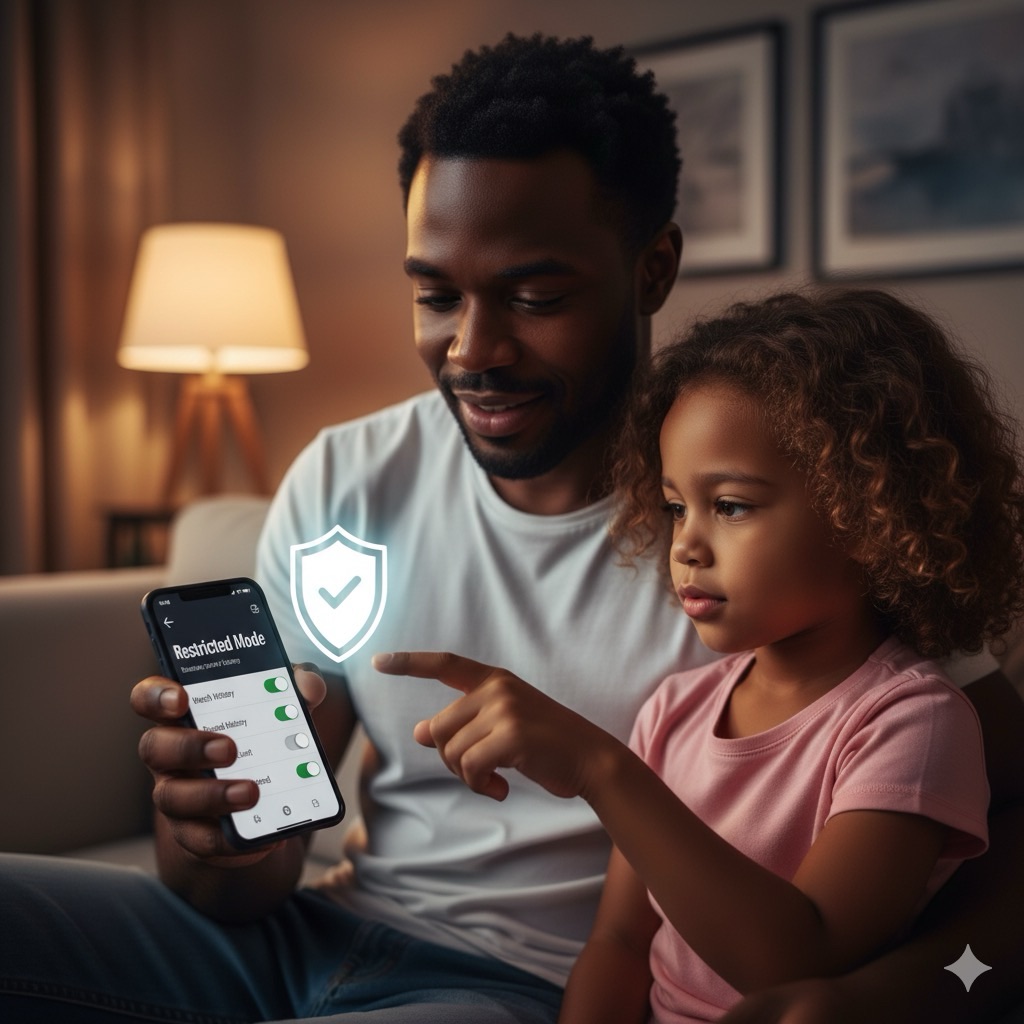
The good news is that you do not have to choose between total isolation and total freedom. YouTube offers powerful tools to help parents manage the main platform. Here is how to use them effectively:
Using Google Family Link, you can create a profile for your child that limits them to content rated “Explore,” “Explore More,” or “Most of YouTube.” This is far safer than just handing them your own logged-in device.
How to set it up: Go to myaccount.google.com → Family Link → Create account for child. Then configure content level based on age.
Restricted Mode is a setting that hides videos flagged as containing mature content. It works by filtering based on metadata (titles, descriptions, and user reports). However, it is not foolproof—videos slip through regularly (studies suggest 8–12% of inappropriate content still appears).
How to activate: Settings → General → Restricted Mode → On. Crucially, lock this setting with your Google account password to prevent your child from disabling it. Passwords can be changed; locked settings cannot.
Make it a habit to check the “History” tab in your child’s YouTube account. This is not spying; it is staying informed about what is influencing them. Look for:
Set a weekly reminder (say, Friday evening) to review history together. Make it a conversation, not an interrogation.
Unfortunately, YouTube does not allow parents to completely disable Shorts within the main app. However, you can:
The best filter is a parent in the room. For the first 2–4 weeks after transitioning to regular YouTube, sit beside your child while they watch. Ask questions:
These conversations build critical thinking skills that algorithms cannot teach.
Not all children are ready for regular YouTube at the same age. Here is a framework based on developmental readiness:
Children at this age benefit from the curated environment. Their impulse control is still developing, and the dangers of unrestricted YouTube are too high. Keep them on YouTube Kids exclusively. If they ask for “real YouTube,” explain: “YouTube Kids is made for kids your age. Real YouTube has things that are scary or boring. When you are older, we will talk about it.”
Begin explaining what regular YouTube is like. Watch some approved content together on your account so they understand the difference. Explain autoplay, algorithms, and ads. Do not transition yet, but build awareness. At the end of Year 3 or beginning of Year 4, start asking: “Are you feeling ready to try real YouTube with me watching?”
If your child is showing signs of digital maturity (can stop watching when asked, understands persuasion tactics, has good impulse control), transition to regular YouTube with strict guardrails:
At this age, most children can handle regular YouTube with fewer restrictions. Transition from “Explore” mode to “Explore More” mode. Still maintain:
Older teens can use “Most of YouTube” mode, but continue:
The UK is finally catching up with technology regulation. Under the new Online Safety Act, which came into force on 25 July 2025, platforms have a legal duty to prevent children from accessing “harmful” content, not just “illegal” content. This is a significant shift.