Physical Address
304 North Cardinal St.
Dorchester Center, MA 02124
Physical Address
304 North Cardinal St.
Dorchester Center, MA 02124
Your Go-To for Digital Advice
Your Go-To for Digital Advice
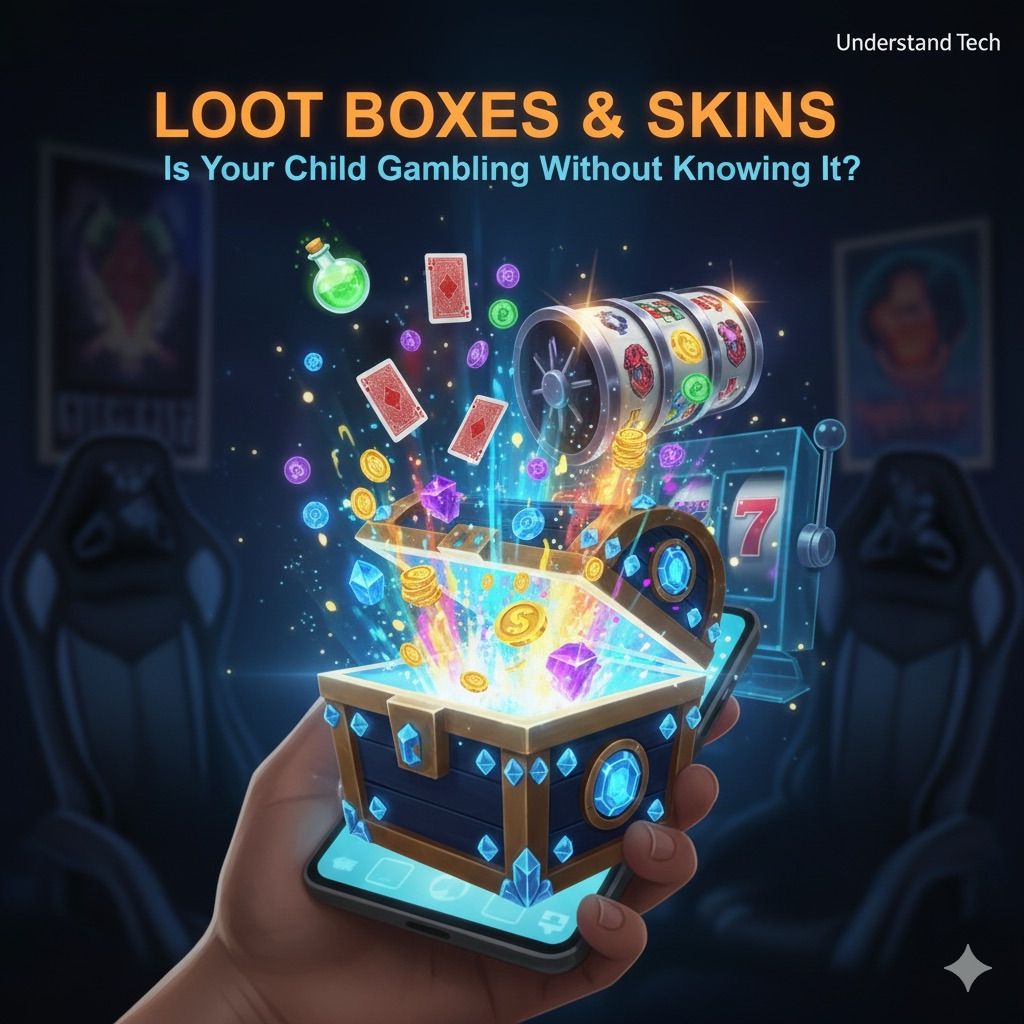
Discover the hidden gambling in loot boxes and skins that children play, with potential risks that go beyond the screen. Learn how to protect your kids from addictive spending.
By Richard / December 2025. In today’s digital gaming world, seemingly harmless features like “loot boxes” and “skins” are raising growing concerns among parents, educators, researchers, and regulators. While these elements might look like just part of the fun in video games, evidence increasingly shows they mimic gambling behaviours—and children may be taking part without fully realising it. At Understand Tech, we want to break down exactly how loot boxes work, why they are so dangerous for young people, what the law says, and most importantly, how you can protect your children from spending hundreds of pounds (sometimes without your knowledge) on randomised, addictive digital items.
What this comprehensive guide covers:
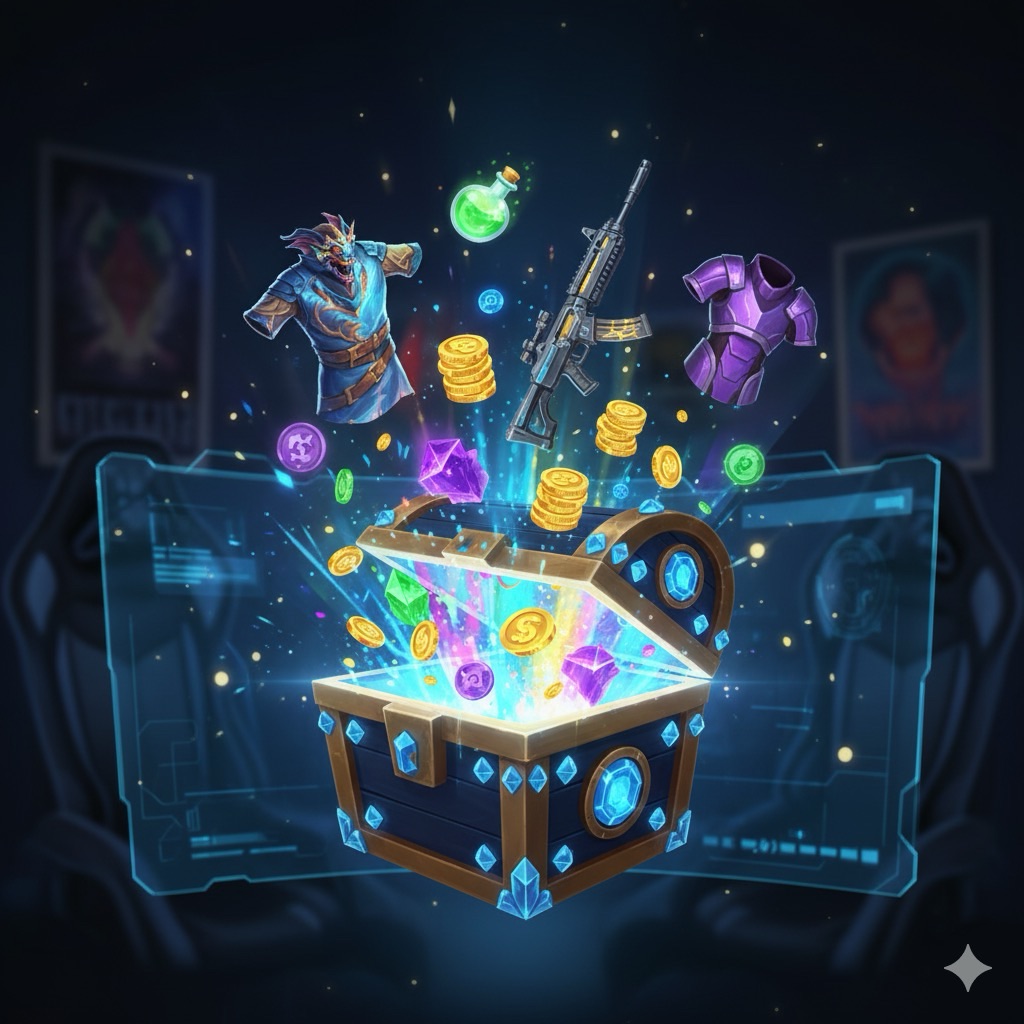
Loot boxes are virtual treasure chests that players can buy or earn in games, containing randomised rewards such as character skins, weapons, cosmetics, or other in-game items. The key word is randomised—when you open a loot box, you do not know what you will get. This is identical to how a slot machine works.
Skins are cosmetic customisations that change the appearance of characters or gear but do not affect gameplay. In most games, skins hold no physical ownership value outside the game. However, in some games and markets, skins can be traded, sold, or even cashed out for real money on third-party websites—which is where the gambling problem becomes severe.
Imagine your child sees a YouTuber using an incredibly rare or exclusive skin. That skin looks cool, and they want it. In the game’s store, they see this skin is only available in a “Premium Loot Box” that costs £7.99. When they buy and open the box, there is a 3% chance they get the skin they want, and a 97% chance they get something else. They do not get the skin. They try again. And again. By the time they finally get the skin they want, they may have spent £40, £50, or even £100 without your knowledge.
⚠️ The Reality: According to research from 5 Rights Foundation (2025), approximately one-third (32%) of UK children report regretting money they spent while playing games online. Another study found that 43% of young people regretted purchases made on games. These are not marginal numbers—this is affecting millions of UK children.
Loot boxes are not accidentally similar to gambling—they are deliberately designed with gambling principles at their core. Understanding this design is crucial because it shows you what your children are actually dealing with.
✓ Important distinction: While loot boxes share many similarities with gambling, not all loot boxes are legally classified as gambling in the UK—yet. This is a major loophole that the gaming industry exploits. However, the research is irrefutable: the psychological mechanics are nearly identical, and the harms are measurable.
Adolescents (aged 12–18) are particularly vulnerable to loot box spending because:
If loot boxes were just harmless cosmetics, this would be a non-issue. But the research linking loot boxes to problem gambling is robust and growing.
Direct quote from NHS England (2020): “No company should be setting up kids for addiction by teaching them to gamble.” This is not hyperbole from a charity—this is the official position of the UK’s health service.
When researchers say someone is “at risk” from loot box spending, they mean:
The numbers are staggering. Research and anecdotal evidence from parents and gaming communities reveal the scale of the problem:
⚠️ Critical reality: If your child has access to a credit card, PayPal, or a saved payment method on their gaming console, they can rack up hundreds of pounds in charges before you notice. Gaming companies are deliberately designed to make spending easy and hiding obvious (no confirmation emails, purchases hidden in obscure menus, etc.).
These games were chosen because they (1) are extremely popular with UK children, (2) have aggressive loot box or spending mechanics, and (3) have proven track records of children spending hundreds of pounds on them.
The Risk Level: EXTREME. This is the game most associated with childhood gambling-adjacent spending in the UK.
How the Spending Works: “Ultimate Team” mode is the problematic feature. Players buy packs of randomised football player cards to build a team. The odds of getting a top-tier player (like Mbappé, Haaland, or Rodri) are incredibly low—often less than 1%. This means your child may buy 50, 100, or even 200 packs before getting the card they want. Each pack costs £3.99 to £17.99.
Real spending example: A child wants Erling Haaland (rated 92). The pull rate for a 92-rated card is approximately 0.11%. To have a statistical 50% chance of pulling him, they would need to open roughly 630 packs, costing approximately £2,500–£10,700 depending on pack type.
Parental Controls (PlayStation 5):
In-game controls (for users who want to allow some spending):
Best practice: Set platform spending to £0. Do not rely on in-game warnings alone—they are designed to be easy to dismiss.
The Risk Level: VERY HIGH. Roblox is insidious because it is a platform with hundreds of games, not a single game. Your child can spend across multiple experiences.
How the Spending Works: “Robux” is Roblox’s virtual currency. Players buy Robux with real money (£4.99 for 400 Robux, £9.99 for 800 Robux, etc.). Robux can be spent on cosmetics, game passes, or limited-time items. Because the currency is abstract and multiple games are involved, spending can spiral quickly. Your child might spend £10 in one game, £15 in another, and £20 in a third—all within an hour.
The FOMO trap: Limited-edition items in Roblox create intense FOMO. Items that are only available for 24–72 hours pressure children into impulse purchases.
Parental Controls (Roblox Accounts):
Critical step: Enable the PIN requirement. Without it, spending limits are ineffective—determined children can keep trying until they get through.
The Risk Level: HIGH (but different from the above). Fortnite does not use randomised loot boxes—you buy exactly what you see. The problem is FOMO and peer pressure.
How the Spending Works: “V-Bucks” are Fortnite’s currency. Cosmetic skins are sold in the shop but only available for 24 hours at a time. This creates intense FOMO: “If I do not buy this skin now, I will never have it again.” Combined with social pressure (all their friends have a particular skin), children feel compelled to spend repeatedly.
Real example: A new collaboration skin is released (e.g., Harry Potter, Marvel character). It is only available for 48 hours. Your child’s entire friend group is buying it. The pressure is intense. A skin costs 1,500 V-Bucks (approximately £11.99). If your child sees three skins they want in a week, that is £36.
Parental Controls (Epic Games):
For children 13+: Fortnite does not have native spending controls as restrictive as PlayStation or Roblox. You will need to:
Step 1: Create a Child Account
Step 2: Set Spending Limits
Step 3: Restrict Content
Using Xbox Family Settings App:
Playtime settings:
Using Nintendo Switch Parental Controls App:
Playtime settings:
Steam has less restrictive parental controls than consoles:
Better alternative: Use third-party parental control software like Bark or Qustodio on PC, which give you finer control over spending and purchases.
✓ Golden rule: Never save your credit card, PayPal, or debit card details on any gaming device or account your child uses. Instead, use gift cards (physical or digital) that you purchase in advance. When the gift card runs out, spending stops. This is the most effective control.
As of December 2025, the UK legal position on loot boxes is complex and evolving.
Several factors suggest stricter regulation is coming:
Bottom line: Do not wait for regulation. The current legal grey area is intentionally exploited by gaming companies. Protect your children yourself through parental controls and education.
The Situation: James’ parents gave him an iPhone with access to Apple ID for “emergencies.” Apple ID was linked to their credit card. James discovered he could buy V-Bucks in Fortnite without needing permission.
What Happened: Over eight weeks, James spent £847 on V-Bucks and cosmetics. His parents discovered it only when reviewing their credit card statement. James claimed he “did not know it was real money.”
What They Did Wrong:
What They Fixed: They removed all payment methods from James’ devices, set up Family Link on his Nintendo Switch (blocking the eShop entirely), and had explicit conversations about how real money works. James is now allowed £5/month on gift cards, which he spends deliberately rather than impulsively.
The Lesson: Young children (under 13) do not fully understand the connection between digital spending and real money. Never link credit cards to child accounts.
The Situation: Emma’s parents discovered she was spending £200/month on Ultimate Team packs in EA Sports FC. They were shocked but approached it calmly.
What They Did: Instead of banning gaming entirely, they:
The Result: Emma’s spending normalised. She still plays EA Sports FC but is more intentional about purchases. She says understanding the psychology behind loot boxes made her resistant to them. She now spends an average of £12/month.
The Lesson: Older teens respond better to education + reasonable limits than to total prohibition. Give them autonomy within guardrails.
The Situation: Marcus’ parents discovered he had spent £3,400 on Ultimate Team packs in three months using their credit card. His grades were dropping and he was anxious about school.
What They Discovered: Marcus admitted he was experiencing “loss chasing”—he would spend, not get the card he wanted, and immediately spend again to “try to make up for it.” He described it as feeling like a “need” rather than a want.
What They Did:
The Result: Three months later, Marcus was able to use gaming moderately. He still had urges to spend but recognised them and could resist. His grades improved and his anxiety dropped.
The Lesson: Severe loot box spending can be addictive and may require professional support. Cold turkey (temporary removal) combined with hard parental controls is sometimes necessary.
The Situation: Sophia’s parents set up parental controls BEFORE she started gaming, not after.
What They Did From Day One:
The Result: After two years of gaming, Sophia has spent approximately £30 total. She actively makes fun of friends who spend excessively. She has developed healthy scepticism about loot boxes.
The Lesson: Prevention through education + proactive parental controls from the start is the most effective strategy.
✓ If you spot red flags: Have a calm conversation first, not an accusation. “I have noticed you seem really focused on getting [specific item]. Tell me what is going on.” Listen. Then implement controls.
Are loot boxes actually gambling?
Legally in the UK, not yet. But psychologically and functionally, yes. Loot boxes use identical reward mechanisms to slot machines (randomness, loss chasing, near misses). The NHS and health experts argue they should be regulated as gambling. The gaming industry argues the items have no real-world cash value (unless they can be sold externally). This distinction is a legal loophole. Regardless of legal classification, the harm is real.
Can I get my money back if my child spent money on loot boxes?
Sometimes. If the spending is on a credit card (not gift cards), you can dispute the charges with your bank as unauthorised. Apple, Google, and PlayStation sometimes refund one-time purchases if you argue your child made them without permission. Contact support for each platform. However, do not rely on refunds—prevention through controls is more effective. Note: Multiple refund requests may result in your account being flagged or restricted.
Is it okay to let my child spend £20/month on games?
If it is their own money from pocket money or earnings, yes—it teaches financial responsibility. If it is your money, it depends on your values and financial situation. The research suggests up to £5–10/month is reasonable for teens 14+; under 13, spending should be avoided entirely. The key is intentional, transparent spending, not impulse spending on randomised items.
My child says “all their friends have the skin”—what should I say?
This is FOMO (Fear of Missing Out), and it is a powerful psychological trigger. You can say: “I understand everyone wants the same thing. But that skin will come back around. And even if it does not, having it does not make you a better person or a better friend. Let’s find something else that makes you happy that costs less.” Help them resist social pressure by pointing out how the algorithm/marketing is deliberately designed to create FOMO. Understanding the psychology helps them resist it.
What if my child disables parental controls I set up?
This is a serious breach of trust and an opportunity for conversation. Determine if they know the password (they should not) or if they found a workaround. If they deliberately circumvented controls, that is grounds for losing gaming privileges temporarily. However, the better approach is understanding why: “Why did you feel you needed to turn this off? Let us talk about what you wanted to buy and why.” Sometimes the controls need adjustment based on their input. Other times, it means losing the device temporarily.
Is Fortnite more dangerous than FIFA/EA Sports FC?
Different but equally dangerous. FIFA/Ultimate Team is more random (loot box addiction); Fortnite is more FOMO-driven (limited cosmetics). Both exploit psychological vulnerabilities. FIFA is more likely to cause “loss chasing”; Fortnite is more likely to cause social anxiety (“I do not have the cool skin everyone else has”). Choose your battles based on your child’s vulnerabilities.
Should I ban gaming entirely?
No. Gaming is a normal part of modern childhood and can be educational and social. Total prohibition backfires—it creates resentment and secret gaming. Instead, set boundaries: spending limits, time limits, parental controls, and education. The goal is healthy gaming, not no gaming.
How do I know if my child has a problem?
Ask yourself: (1) Is spending affecting their academic performance? (2) Are they losing sleep? (3) Are they hiding spending or lying about it? (4) Is spending causing family conflict? (5) Do they seem anxious or distressed when unable to spend? If you answered yes to any of these, it is time to intervene and possibly seek professional support.
The gaming industry has built a multi-billion-pound business on loot boxes, and they are deliberately targeting children with psychological manipulation. They argue it is just cosmetics, but the research is irrefutable: loot boxes cause real harm.
Your job as a parent is not to ban gaming—gaming is here to stay. Your job is to protect your children from exploitation by setting hard boundaries, using parental controls, and educating them about how these systems work.
The good news? When parents are informed and take action, children adapt quickly. They develop healthy scepticism about loot boxes. They make intentional purchasing decisions. They learn that real fulfillment does not come from cosmetic items.
Start today. Remove your payment methods from their devices. Set spending to zero. Have the conversation. This is one of the most important digital literacy conversations you will have with your child.