Physical Address
304 North Cardinal St.
Dorchester Center, MA 02124
Physical Address
304 North Cardinal St.
Dorchester Center, MA 02124
Your Go-To for Digital Advice
Your Go-To for Digital Advice
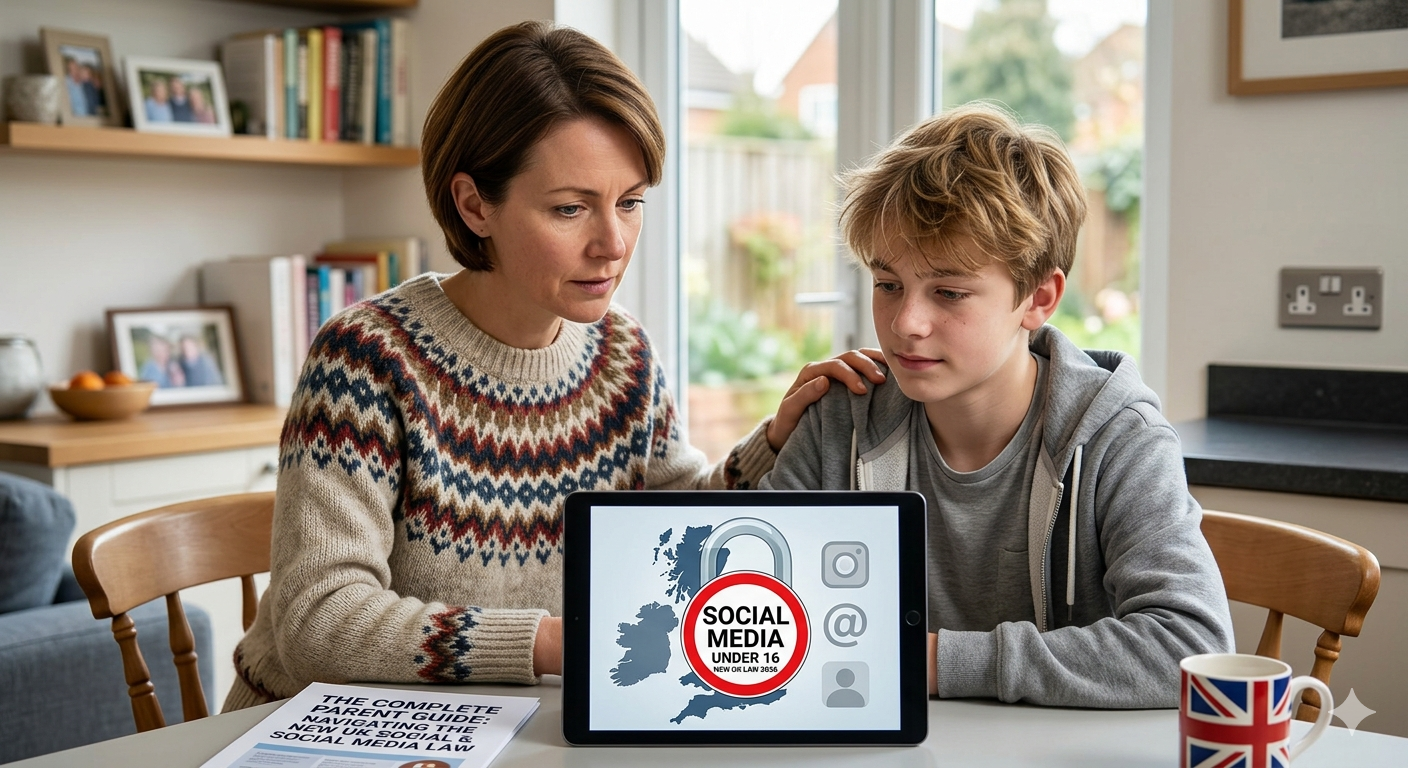
New UK social media ban explained: what the under-16 restriction means for parents, affected apps, enforcement rules, and how to prepare your family.
Short answer: The UK government has announced a legal ban on social media for all children under 16, covering major platforms like TikTok, Snapchat, Instagram, YouTube, Facebook and X, with the aim of bringing it into force by spring 2027 once Parliament has approved the legislation. Messaging apps such as WhatsApp and Signal are expected to be treated differently, though final details will depend on the bill that goes through Parliament.
Here are the key points about the new UK social media ban for under‑16s in plain English.
On 15 June 2026, the Prime Minister announced that the UK will introduce a total ban on social media for children under the age of 16. In his statement he argued that platforms such as Snapchat, TikTok, YouTube, Instagram, Facebook and X are “designed to be addictive” and are “making children unhappy”.
The ban is part of a wider package of measures on children’s digital safety that also targets gaming services, live‑streaming platforms and AI chatbots, especially those with romantic or sexual content for under‑18s. It builds on an earlier government consultation that asked parents, young people, experts and tech firms whether there should be a legal age limit for social media and what other safeguards are needed.
For the ban to become law, the government must now introduce formal legislation in Parliament, where MPs and peers can debate, amend and vote on the proposals. The government has said it wants the legislation passed by late December 2026 so the ban can come into force in the spring of 2027, but political debates, court challenges or technical delays could still shift that timetable.
The new under‑16 social media ban does not appear out of nowhere; it sits on top of the UK’s wider Online Safety Act, which already requires platforms to protect children from harmful content and mandates robust age checks.
Under Ofcom’s rules, websites and apps that are likely to be used by children must verify user ages more effectively, filter out illegal and harmful content and adjust algorithms so that young users are not routinely pushed towards self‑harm, pornographic or violent material. Companies that fail to follow detailed child‑safety measures can be fined up to £18 million or 10% of their global revenue, and Ofcom can even seek court orders to block services in the UK.
Ofcom has also made clear that it is prepared to go further if platforms continue to ignore the law, including the possibility of banning children under 18 from social media altogether if companies will not make their services safe. The new under‑16 ban is therefore best seen as the government choosing a much harder line, after years of warning tech firms that incremental changes were not enough.
In public statements about the new law, the government has repeatedly named TikTok, Snapchat, YouTube, Instagram, Facebook and X as the core platforms that will be banned for under‑16s. These are the large, algorithm‑driven social networks where children post content, build follower counts and interact with strangers or semi‑strangers.
Officials have also spoken about targeting “high‑risk” social media, meaning services that combine features such as infinite scrolling, autoplay, public discovery, live‑streaming and weak age checks, which are seen as particularly harmful to children’s mental health. In practice that is likely to include almost all major global social platforms used by UK teenagers, though an exact list will be set out in the final legislation or in Ofcom guidance.
The initial announcement explicitly said that messaging apps like WhatsApp and Signal will not be covered by the ban, although the government is still exploring tougher limits on some features for under‑18s, such as disappearing messages or large group chats. That means your under‑16 may still be able to use private messaging for school, family and close friends, but they will not be allowed accounts on the big public social platforms once the law is in force.
The government’s argument for a ban centres on three main themes: mental health, exposure to harmful content and the design of platforms to maximise engagement rather than wellbeing. Ministers say social media feeds are filled with content that makes children anxious and unhappy, and that the apps are specifically engineered to keep young people scrolling late into the night.
The political pressure has been building for years as bereaved parents and campaign groups have highlighted cases where children were exposed to self‑harm, suicide and extreme dieting content that algorithms kept recommending. Official data shows that many children use platforms that officially have a minimum age of 13 long before they reach that age, despite existing rules and parental efforts.
Public opinion has shifted sharply too: polling has found that a large majority of parents support a ban on social media for under‑16s, with many saying the risks now outweigh the benefits. Petitions calling for 16 as the legal minimum age for social media have also attracted support, adding to the pressure on ministers to act.
Alongside mental‑health concerns, there is growing evidence that UK children spend between five and seven hours per day on screens, significantly more than health experts recommend, which has fuelled calls for stronger national action on digital wellbeing. The under‑16 ban is part of a wider attempt to rebalance children’s lives away from constant connectivity and towards sleep, attention and in‑person relationships.
The exact wording of the new law has not yet been published, but government statements and existing Online Safety Act rules give a clear outline of how the ban is likely to operate day‑to‑day.
Under Ofcom’s child‑safety code, platforms already have to check user ages more effectively using tools such as document checks, biometric age‑estimation and third‑party age‑verification providers. The new ban is expected to require all high‑risk social media platforms to block the creation or use of accounts by people they know or reasonably suspect to be under 16, using these age‑verification systems.
Ofcom has stressed that if platforms fail to adopt robust age checks and continue to allow under‑age users, it is prepared to use the toughest enforcement measures, including formal investigations and, ultimately, orders to cut off services in the UK. That makes strong age‑verification the backbone of the new social media age limit, rather than relying on parents or schools alone.
The Online Safety Act and the new proposals also look towards Apple’s App Store, Google Play and device makers as part of enforcement. The government has already warned companies like Apple and Google that they may be required to introduce features that stop children from accessing or creating explicit images on devices, and it has hinted that similar pressure will be applied to help enforce social media age limits.
In practice that could mean app‑store age‑gating for social media apps, tighter parental‑control defaults on new phones and tablets, and requirements for age‑verification systems to be integrated into platforms at system level, rather than just relying on in‑app tick‑boxes.
Ofcom is the regulator responsible for enforcing the Online Safety Act and will almost certainly be given formal powers to enforce the under‑16 social media ban as well. It can demand information from companies, launch investigations, require changes to design and algorithms, impose heavy fines and, in extreme cases, order internet providers or app stores to block access to non‑compliant services.
If platforms ignore the new age limit or try to circumvent it with weak checks, they risk fines of up to 10% of global annual revenue. For the biggest tech companies that could run into billions of pounds, which is designed to make compliance more attractive than resistance.
Even before confirming a full under‑16 ban, ministers were consulting on measures such as overnight social media curfews, limits on infinite scrolling and autoplay, and stricter controls on AI chatbots for under‑18s. The government is still exploring whether some of these measures should apply to older teenagers who will not be covered by the under‑16 ban itself.
Early coverage of the new package suggests that the final law may combine a hard age ban for under‑16s with curfews, friction and extra protections for 16–17‑year‑olds, such as turning off endless feeds by default and requiring platforms to build in more regular break prompts.
Charities and experts have warned that a simple ban will be difficult to enforce perfectly, especially given the widespread use of VPNs, secondary accounts and older friends’ devices among teenagers. Some children will inevitably try to evade the rules, just as they already bypass age limits on apps today, which means the law cannot be the only solution.
That is why many child‑safety organisations argue that the most effective approach is a combination of stronger regulation, improved platform design, realistic parental supervision and open conversations at home, rather than relying on enforcement alone to fix complex mental‑health and social issues.
The impact of the new law will feel very different for a 10‑year‑old versus a 15‑year‑old who has already built up years of online friendships and habits. Thinking in age bands can help you plan ahead.
Many UK children already own smartphones by Year 6, even though a large number of parents say they regret how early devices entered family life. Studies show that by age 11, a clear majority of UK children have a smartphone, and many have already joined at least one social media or chat platform despite existing 13+ rules.
For this age group, the under‑16 ban will act mainly as a clear national boundary you can point to: “social media is for 16 and over, and that is the law”. It may actually make your life easier, because you are not the only “strict” parent – every parent in England, Scotland, Wales and Northern Ireland will be working with the same legal rule.
These are the years when most children traditionally join social media, especially when they start secondary school and want to keep up with classmates online. Under the new law they will be legally barred from those platforms for another three to five years, which will feel like a very big shift compared with older siblings and cousins.
Friendship groups will still move online, but likely through messaging apps and school platforms rather than public social networks, at least if the government’s decision to exclude services like WhatsApp from the ban remains in place. Your job will be to help your child feel socially included without defaulting to unsafe apps or loopholes.
For mid‑teens who already have social media accounts, the change will be hardest, especially if the law forces platforms to shut down under‑16 accounts or if app stores block access on their devices. The government’s consultation has been testing the impact of complete bans, daily limits and overnight curfews on 13–15‑year‑olds, suggesting ministers know this age group will need particular attention.
Parents of 14‑ and 15‑year‑olds will need a plan for transitioning off social media in a way that protects mental health and friendships, rather than simply flipping a switch and hoping for the best. That will mean finding alternative ways to socialise, agreeing boundaries around messaging apps and focusing on sleep, homework and offline activities during the adjustment.
The under‑16 ban does not apply to 16‑ and 17‑year‑olds, but the broader Online Safety Act and new design rules will still change their experience of apps, especially around recommended content and addictive features. The government is also actively exploring curfews and design changes, such as limiting infinite scroll, for under‑18s.
For this age group, the focus will be less about whether they can use social media at all and more about how safely and how much; that includes managing screen time, dealing with pressure to share explicit images and navigating online relationships.
Even though the under‑16 ban has been announced, it is not yet in force, and children are still using social media today under the existing rules. The most powerful thing you can do in 2026 is to prepare your family early, so the eventual legal changes feel manageable rather than chaotic.
Research on UK families shows children are currently using screens between five and seven hours a day, far above recommended levels, and that parents often struggle to make rules stick. Guides for UK families emphasise that rules work best when they apply to everyone, including adults, and when they focus on protecting sleep, attention and real‑world connections rather than chasing zero screen time.
Practical strategies include creating device‑free zones such as bedrooms, turning off screens an hour before bedtime and agreeing specific times when social and entertainment apps are allowed. Using built‑in features such as iOS Screen Time and Android Digital Wellbeing can help you enforce those limits consistently without constant arguments.
Many parents underestimate which apps are on a child’s phone and where social features exist, including in games and editing tools that look harmless at first glance. Safety guides point out that apps such as live‑streaming platforms, friend‑finding apps and even some game platforms have social and discovery features that can expose children to strangers.
Take time to sit down with your child, go through installed apps together and talk about how they use each one – including whether there is chat, public posting or location sharing enabled. This conversation is more effective than silent monitoring because it builds trust and gives you a chance to explain why certain apps might need to go as the law changes.
Even once the under‑16 ban is active, you will still need device‑level controls to manage messaging apps, games and other online services that sit alongside social media. Modern devices offer powerful tools: Apple’s Screen Time, Google’s Family Link, Xbox Family Settings and similar systems let you control app access, screen time, age ratings, spending and communication.
For example, Xbox’s family system allows you to set age‑based content filters, limit screen‑time schedules and restrict who your child can talk to during gaming sessions. On phones and tablets, you can similarly restrict app installations, hide explicit content and require approval for new apps, which will all be important in preventing workarounds when certain social apps become illegal for under‑16s.
Parent guides consistently highlight that the biggest online dangers – grooming, exposure to adult content, bullying, scams and data harvesting – cut across multiple apps and services. A child can encounter these risks on chat tools, game platforms or lesser‑known social networks just as easily as on the household‑name apps politicians mention.
That is why experts encourage you to teach core safety behaviours, such as never sharing school names or addresses in videos, keeping profiles private where possible, not moving conversations to private apps after meeting someone publicly and telling a trusted adult if an online interaction feels uncomfortable.
For many teens, social media is woven into identity, friendship and daily routine, so a legal age ban will feel like more than just a technical change. It helps to start talking now about the reasons behind the new law – including sleep, mental health and pressure from likes and follower counts – so your child understands it is not about punishment but protection.
Co‑design new routines together: which group chats they will keep, what offline meet‑ups will replace some online time, and which hobbies or sports they might invest more energy in as screen time reduces. When children feel they have some control over the transition, they are less likely to rebel or hide risky behaviour.
The government’s announcement explicitly said messaging apps like WhatsApp and Signal are not part of the new under‑16 social media ban, although the details may change as the law is drafted. However, WhatsApp’s own policies already set a minimum age of 16 in the UK and EU, which many families quietly ignore today.
In other words, the legal ban focuses on major social networks, but platform policies may still restrict younger teens on messaging apps, and it will be up to parents to decide whether and how strictly to apply those platform rules at home.
The Prime Minister specifically named YouTube alongside TikTok, Snapchat, Instagram, Facebook and X as platforms that would be included in the under‑16 ban. That suggests ordinary YouTube accounts, with subscriptions, comments and recommendations, will not be allowed for under‑16s once the law is in force.
However, there is a difference between public social profiles and limited access to educational videos, and it is possible the final law or Ofcom guidance will clarify what is acceptable in schools or for homework. Until that detail is clear, it is sensible to assume that ordinary, personalised YouTube accounts will be treated as social media accounts under the ban.
A legal age ban will almost certainly reduce the volume of bullying that happens on big social platforms for under‑16s, but it will not make it disappear completely. Bullying can move into messaging apps, games, group chats or even school platforms, and children may still create underground accounts to get around the rules.
Experts therefore emphasise that parents, schools and platforms must keep working together on culture and behaviour: teaching empathy, promoting bystander intervention, offering safe reporting routes and responding quickly when a child is being targeted.
The UK is not alone: similar under‑16 bans have already been discussed or introduced in other countries, where restrictions apply to services that let users post and share content and interact socially. The government has repeatedly said it wants the UK to be a “world leader” in child online safety and is looking closely at those models.
At the same time, regulators in Europe and elsewhere are also tightening age verification and investigating addictive design features, meaning the global environment for teen social media is rapidly changing, not just in Britain.
Yes. The government’s announcement sets out its political intention, but the actual law still has to be drafted, scrutinised and passed by Parliament. During that process, MPs, peers, campaigners, tech firms and child‑safety experts will all lobby for changes, and some details – including exactly which services are covered and how messaging apps are treated – may shift.
Court challenges are also possible once the law is in force, especially around privacy, proportionality and the impact on freedom of expression for older teens. That means parents should watch for updates through reliable news sources and official channels rather than assuming every early headline will match the final rules exactly.
The way you explain the under‑16 ban can make the difference between your child feeling punished and your child feeling protected. Here are conversation themes that help build trust rather than fear.
Children and teenagers know that adults around them use social media every day, so a law that bans them while adults continue scrolling can feel unfair unless you acknowledge that openly. Explain that adults are also having to rethink how they use screens, and consider putting some family‑wide rules in place so you are not asking your child to do anything you are not willing to try yourself.
Be honest that the law will bring real changes, including saying goodbye to some apps and habits, and that you are committed to making those changes together rather than simply imposing them.
Instead of talking only about abstract “harms”, connect the law to things your child already feels: poor sleep after late‑night scrolling, difficulty concentrating in lessons and mood dips after comparing themselves to others online. Research shows that many UK children are using screens far beyond recommended limits, especially in the evening, which is strongly linked to sleep problems and anxiety.
Frame the ban as part of a bigger effort to give children their time, focus and confidence back, not just as the government taking away something fun.
One of the biggest fears teens have is losing friendships if they lose access to specific apps. Help your child see that friendship is not the same as a platform; you can support them to stay connected through messaging, in‑person meet‑ups, school activities and other channels that fall outside the ban.
Work together to list their closest friends and agree how they will stay in touch as social media rules tighten – whether that is through messaging apps, school email, gaming chats you have reviewed together or regular offline meet‑ups.
Modern guides for parents stress that the goal is not to make children afraid of technology, but to help them understand the systems behind it. Talk about how algorithms, infinite scroll, likes and streaks are deliberately designed to keep people coming back, and how the new law is partly about forcing companies to change those designs for children.
When children see social media as a designed product rather than a neutral mirror of their life, it becomes easier for them to question whether it deserves as much power over their time and emotions as it currently holds.
Use this step‑by‑step checklist to prepare your family for the under‑16 social media ban and the broader shift towards safer, healthier digital habits.