Physical Address
304 North Cardinal St.
Dorchester Center, MA 02124
Physical Address
304 North Cardinal St.
Dorchester Center, MA 02124
Your Go-To for Digital Advice
Your Go-To for Digital Advice
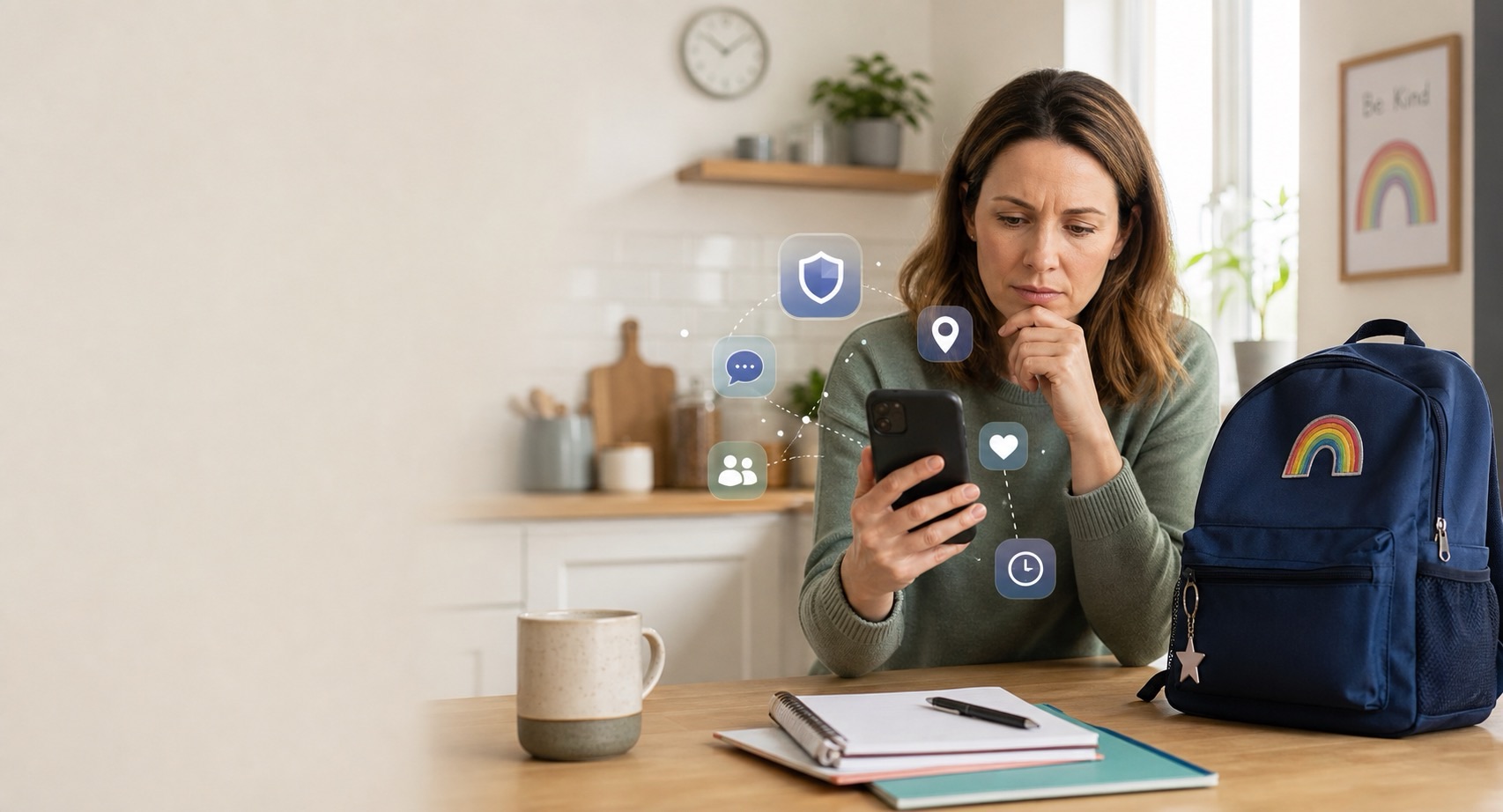
Worried which apps your child will lose? We explain the UK under‑16 social media ban, which apps are affected, what’s excluded, and what parents should do before 2027.
If you have seen headlines saying the UK is banning social media for under-16s, the big question for families is simple: which apps are actually likely to be affected? The short answer is that the government has named major social platforms such as Instagram, TikTok, Snapchat, Facebook, YouTube and X as the kind of services it expects to cover, while it has also said it does not intend to include messaging services like WhatsApp and Signal. The changes are expected before the end of 2026 and implementation is expected in spring 2027.
This guide breaks down what the new UK under-16 social media ban means, which apps are most likely to be included, which services may fall outside the ban, and what families should do before the rules begin.
On 15 June 2026 the UK government announced that it plans to ban social media platforms from offering services to under-16s. It also said that wider restrictions will be placed on harmful features online, especially livestreaming and strangers being able to contact children.
At the time of writing, this is not yet a fully live platform-by-platform shutdown. The first regulations are expected before the end of 2026, with implementation expected in spring 2027.
Based on the government’s own wording, the apps and platforms most likely to be affected are:
These are the services specifically named by the government as examples of the kind of platforms captured by the model it wants to use.
The government says the ban will target user-to-user platforms whose purpose is social interaction and which allow users to post material alongside algorithms. In practice, that points toward mainstream social platforms rather than every digital service a child might use.
That means the strongest risk factors are public posting, recommendation systems, social feedback loops, viral distribution, endless feeds and contact from wider networks.
| App or service | Current likelihood | Why |
|---|---|---|
| Very likely | Named by government; social posting, recommendations, DMs and algorithmic feeds fit the model closely. | |
| TikTok | Very likely | Named by government; highly algorithmic, feed-based and socially interactive. |
| Snapchat | Very likely | Named by government; direct contact, social sharing and discovery make it a central target. |
| Very likely | Named by government; classic social platform with posting, groups and recommendations. | |
| YouTube | Likely | Named by government, but educational carve-outs may matter. |
| X | Very likely | Named by government; public posting and open interaction match the stated policy logic. |
| Unlikely | The government says it does not intend messaging services like WhatsApp to be included. | |
| Signal | Unlikely | Also specifically mentioned as not intended to be included. |
Instagram looks almost certain to be affected if the current plan goes ahead unchanged. It is exactly the kind of service ministers are describing: social posting, recommendations, messaging, discoverability and algorithmic engagement.
TikTok is another app that looks very likely to fall under the ban. It is built around short-form recommended video, rapid engagement, creator culture and algorithmic discovery at scale.
Snapchat is strongly exposed because it combines messaging, friend networks, stories, discovery and location-linked social habits. It is not just a simple messaging tool.
Facebook is still clearly inside the government’s examples. Groups, feeds, public content, user-generated posting and recommendations all align with the type of service ministers are targeting.
YouTube is one of the most interesting cases because it is named by government, but the fact sheet also says the government does not want educational platforms covered. That means the final treatment of YouTube may depend on how lawmakers separate educational access from the platform’s wider social and recommendation-based functions.
X is also specifically named and appears likely to be covered. It is public, recommendation-led and often exposes users to content and interaction well beyond known contacts.
The clearest exclusions so far are messaging services like WhatsApp and Signal. The government has said it does not intend for those services to be included in the social media ban.
Gaming is where many parents could get confused. The social media ban itself is focused on certain social media services, but the government has also said harmful features such as livestreaming and strangers communicating with children will be restricted more widely across online services, including gaming.
So a game may not be banned in the same way a social media platform could be, yet some of its features may still be switched off or heavily restricted for younger users.
The under-16 social media ban is aimed at children younger than 16. But the wider changes do not stop there. The government says 16 and 17 year olds will still be able to access social media, yet livestreaming and stranger communication will be switched off by default for those age groups on relevant services.
Yes, potentially. The government has not yet published the final legal list of covered services. It says there will be narrowly defined exemptions for things like educational services, e-commerce platforms and music streaming.
The official line is that parents do not need to do anything right now and that more detail will come ahead of 2027. In practical terms, though, this is the best time to audit the apps your child already uses, which accounts are real age accounts, which privacy settings are open and whether there is a family plan for what happens if access changes in 2027.
Is Instagram affected? Yes, very likely.
Is TikTok affected? Yes, very likely.
Is Snapchat affected? Yes, very likely.
Is Facebook affected? Yes, very likely.
Is YouTube affected? Likely, but final detail may depend on exemptions.
Is X affected? Yes, likely.
Is WhatsApp affected? The government says it does not intend WhatsApp to be included.
Is Signal affected? The government says it does not intend Signal to be included.
Are games banned? No, but features like livestreaming and stranger communication may be restricted more widely.