Physical Address
304 North Cardinal St.
Dorchester Center, MA 02124
Physical Address
304 North Cardinal St.
Dorchester Center, MA 02124

Your Go-To for Digital Advice
Your Go-To for Digital Advice
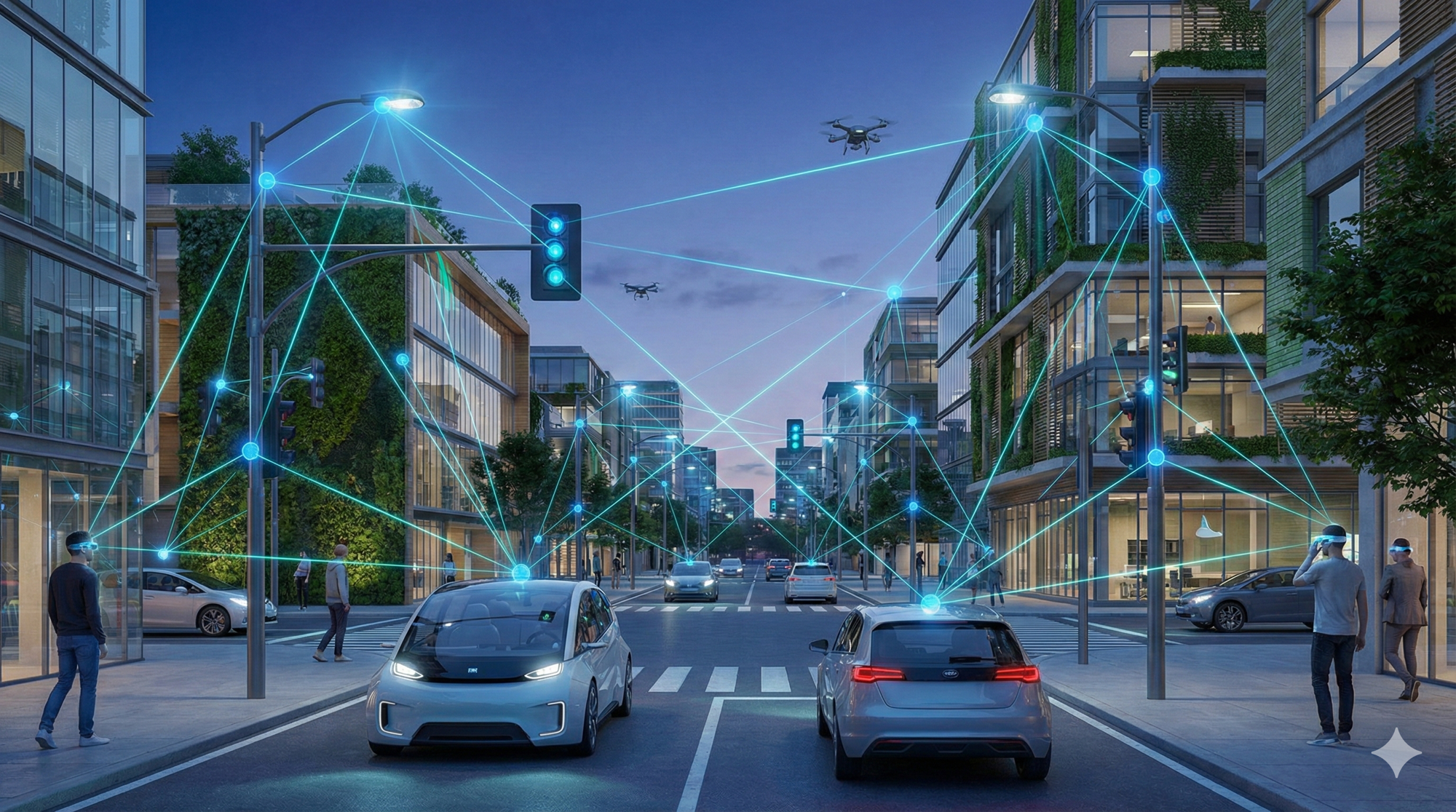
What comes after 5G, what’s real in 2026, and when it will actually matter for your family and devices.
6G is the name for the next big upgrade to mobile networks after 5G, promising speeds up to
hundreds of times faster than today’s best connections and almost instant response times
(latency).
Want a clear, jargon‑free answer right now? Ask our free AI tech chatbot for UK parents about Roblox, TikTok, screen time and more in seconds – try it here.
In 2026, this is still early-stage technology: it lives in labs, standards meetings, and small research
trials rather than in your phone’s signal bar. But the decisions and experiments happening now
will shape how our children experience the internet in the 2030s – from holographic calls to safer
autonomous cars.
If 4G was “mobile internet” and 5G is “fast, everywhere internet”, 6G aims to be “instant, intelligent
and immersive internet” – where networks feel invisible because everything just connects and responds
immediately.
| Feature | 5G Today | 6G (Expected) |
|---|---|---|
| Peak speed | Up to ~10–20 Gbps in ideal lab/field tests | Up to ~1 Tbps in research demos (100× higher) |
| Typical user speed | 100–1,000 Mbps in good coverage areas | Several Gbps expected for everyday users in mature deployments |
| Latency (response time) | 1–10 ms in best cases | Below 1 ms for critical applications |
| Supported devices | ~1 million per km² | 10+ million per km² (dense IoT, sensors) |
| Frequency bands | Sub‑6 GHz, 24–40 GHz mm | Mid‑bands plus 7–24 GHz and early terahertz bands |
| Key focus | Fast mobile broadband, low-latency apps, industrial IoT [web:19] | Immersive XR, holography, sensing, massive autonomy, digital twins [web:22][web:46][web:54] |
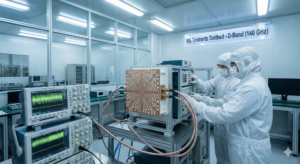
6G is real as a research and standards effort, but not as something you can buy from your mobile operator
in 2026. There are no 6G phones, no 6G SIM‑only plans, and no 6G logo in your status bar yet.
Instead, what exists today are:
In other words, 6G in 2026 is like 5G was around 2012–2014: a lot of white papers, testbeds and demos, but
no consumer rollout yet.
Under the hood, 6G builds on what 5G already does well but pushes it much further using new spectrum,
smarter antennas, and tighter integration of sensing and AI.

Today’s networks mostly use the same basic idea: send radio waves between your device and the nearest mast.
6G experiments move into higher frequencies – especially the so‑called terahertz range – where you can carry
huge amounts of data in each signal.
The trade‑off is that these higher‑frequency signals don’t travel as far and are blocked more easily by
walls, trees, and even rain. To make this work in the real world, 6G needs:
6G research is also focusing on “joint communication and sensing” (often called ISAC or JCAS). That means
your network wouldn’t just carry data; it could also sense motion, position and environment – a bit like
turning parts of the network into a giant radar.
This could enable:
6G networks are being designed from the start to rely on AI and machine learning to handle complexity.
Instead of engineers manually tuning thousands of parameters, algorithms will constantly:

The real reason 6G matters is not just speed; it is the new kinds of experiences ultra‑fast, ultra‑reliable
connectivity makes possible.
6G white papers often show futuristic scenes where you chat to a life‑size 3D hologram of a family member
in your living room. While that’s marketing, the underlying idea is serious: if networks can shift terabits
of data with almost no delay, they can handle full‑body 3D video, spatial audio, and even haptic feedback.
In practical terms, that could mean:
Today’s VR and AR often feel bulky, laggy, and isolating. For children or teens, motion sickness and
eye‑strain can be a concern. 6G aims to shift more processing to the network, so headsets can be lighter
while still providing high‑resolution, responsive worlds.
With lower latency and more bandwidth, XR headsets could:
6G research also focuses heavily on vehicles, drones, and robots which rely on connectivity to make
smarter, safer decisions. With sub‑millisecond latency and precise sensing, vehicles can
share information in real time about their position, speed, and road conditions.
6G is expected to bring a huge jump in the number of sensors and devices we can attach to the network,
from home appliances to industrial machines and city infrastructure. When you combine that
data with powerful AI, you can create “digital twins” – live digital models of a factory, a building, or
even a whole city.
This opens up possibilities such as:
Different organisations predict slightly different timelines, but most agree on a rough pattern:
standards work this decade, early deployments around 2030, and wider consumer availability after that.
The UK is investing in 6G research and advanced wireless testbeds, but the current focus is still on
expanding 5G and 5G‑Advanced. That means:
It’s easy to see headlines like “6G in 2026” or “10× faster than 5G” and assume your current phone is
about to be outdated overnight. The reality is slower and more practical.
For most families and everyday users in 2026, the best strategy is to focus on getting the most out of
4G/5G today while keeping an eye on 6G developments without feeling pressured to upgrade early.
If you run a tech or parenting site, 6G is not just one article – it is a whole cluster of helpful content.
Here are some ideas and keyword angles.
6G is real as a research and standards topic, but there are no commercial 6G networks or phones available
in 2026. You cannot buy a 6G plan yet.
Research targets show potential peak speeds up to 1 Tbps, compared with around 10–20 Gbps for 5G in ideal
conditions, but everyday user speeds will be lower in practice.
Most roadmaps point to early commercial 6G deployments around 2030 in some countries, with mainstream
consumer availability likely in the early‑mid 2030s.
Yes. Just as 4G phones cannot use 5G, today’s 5G phones will not support future 6G networks. New chips
and antennas will be required.
6G will still have to comply with strict international safety limits for radio exposure, just like 4G and 5G.
Regulators and health bodies will review new bands before mass rollout.
Probably not. 6G will complement home and office Wi‑Fi rather than replace it, especially for local
traffic and indoor coverage.
No. Fixed broadband and fibre will still play a major role – in fact, 6G masts will likely rely on very
fast fibre connections in the background.
Want a clear, jargon‑free answer right now? Ask our free AI tech chatbot for UK parents about Roblox, TikTok, screen time and more in seconds – try it here.