Physical Address
304 North Cardinal St.
Dorchester Center, MA 02124
Physical Address
304 North Cardinal St.
Dorchester Center, MA 02124

Your Go-To for Digital Advice
Your Go-To for Digital Advice

Telegram is a messaging app that has rapidly gained popularity among teens, offering privacy features like end-to-end encryption and secret chats. However, weak moderation and privacy settings pose significant risks for parents trying to monitor their children's online activities. Dive deeper to understand the real risks and effective strategies to keep your family safer.

As a parent, I understand how overwhelming it is to keep up with the apps our kids use every day. One app that keeps popping up is Telegram. It’s powerful, popular—and very different from WhatsApp or Messenger. With 1 billion users globally and 2.5 million new ones joining daily, it’s not a fringe app. Millions of teens use it. But Telegram’s privacy features, weak moderation, and encryption mean parents often can’t see what’s happening. Here’s what you need to know about Telegram, what the real risks are (with data), and what you can actually do to keep your family safer.
Telegram is a messaging app that lets users send texts, videos, photos, and files. But it’s much more than that. You can make voice and video calls, create groups with thousands of members, and follow channels with millions of subscribers. It’s part messaging app, part social network, part publishing platform.
Founded in 2013 by Pavel Durov (the co-founder of VKontakte, Russia’s version of Facebook), Telegram started as an alternative to SMS and WhatsApp. Today, it’s one of the most downloaded messaging apps in the world.
Why the rapid growth? In 2021, when WhatsApp changed its privacy policy, 25 million people switched to Telegram in 72 hours. When Facebook went down in 2021, 70 million joined Telegram in a single day. Each crisis has pushed millions to Telegram, and they’ve stayed.
Translation: Telegram isn’t just for adults. Teens are there. And their parents often have no idea what the app actually does.
Standard one-on-one and group messages. These are stored on Telegram’s servers and encrypted between you and the server, but Telegram can theoretically access them if legally required.
This is where parental visibility breaks down. Secret chats use end-to-end encryption with a key held only by the two participants. Telegram cannot access these messages, even if asked by law enforcement. And neither can parents.
Secret chat features:
Parent takeaway: If your child is using Secret Chats, you cannot see what they’re talking about. Period.
Anyone can create a channel. Followers see posts but can’t interact (unless the channel allows comments). Channels can have unlimited subscribers. Examples: news channels, celebrity updates, hobby communities. Many are moderated; many are not.
Multiple people chatting in one space. Groups can have up to 200,000 members. Admin controls vary. Some groups are well-moderated; some are complete chaos.
This is a huge security issue. Anyone can create a Telegram bot. Bots can be programmed to do almost anything: collect data, run phishing scams, distribute malware, send spam, or mimic official services.
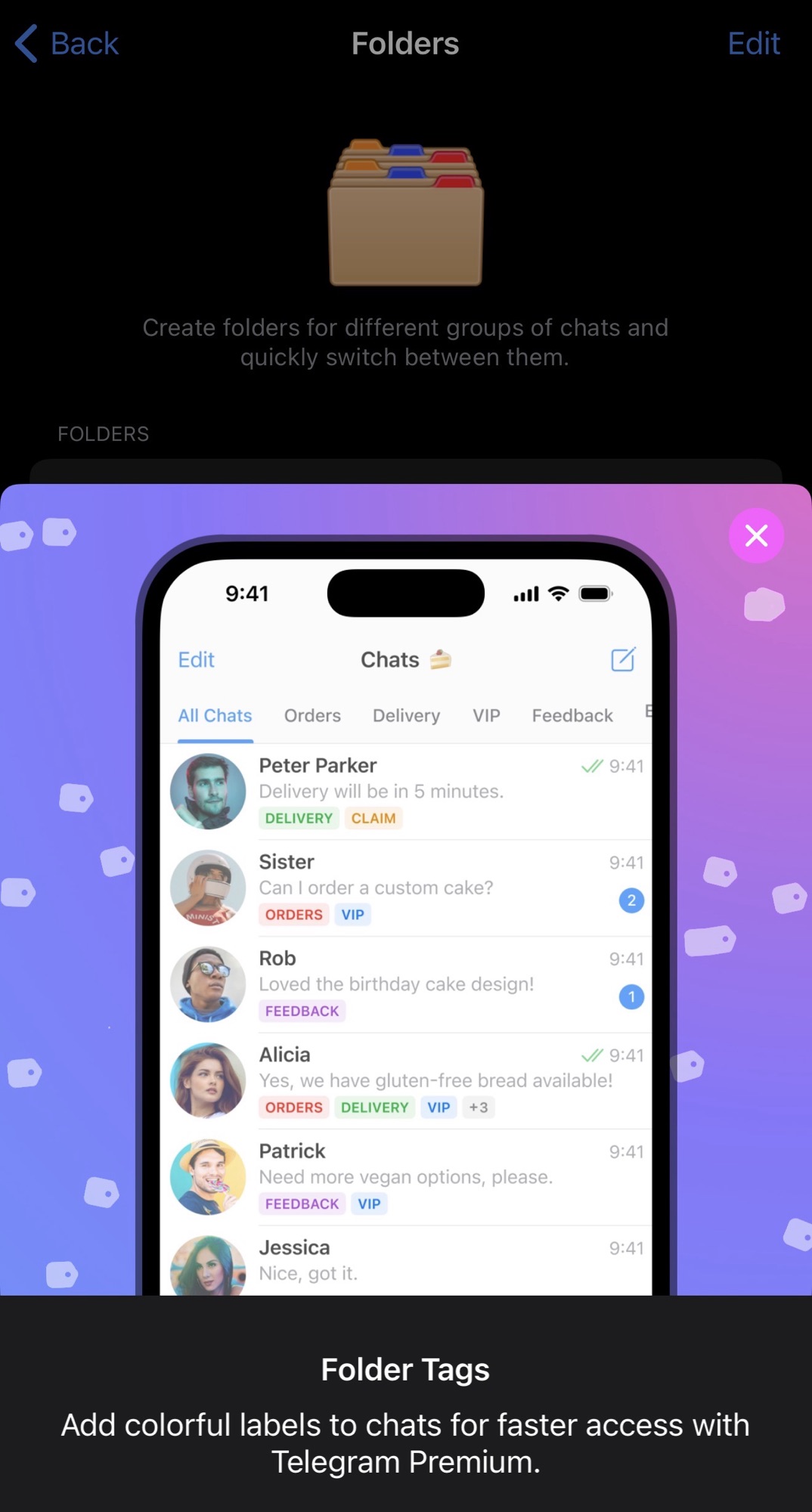 Telegram’s privacy settings are robust—but only if they’re configured. Most users never change defaults.
Official minimum age: 16 years old in most countries, 13 in some.
Reality: There’s no age verification. No ID check. No parental consent required. A 10-year-old with an email address can create an account and claim to be 16. Telegram has no way to verify this.
Telegram’s terms of service say the service is not intended for users under 16, and users accept this by downloading the app. But enforcement is non-existent.
This is the most serious risk. In February 2025, Australia’s eSafety Commissioner fined Telegram nearly £760,000 ($957,780) for failing to respond to transparency requests about child sexual exploitation and abuse material (CSAM) on the platform.
Key findings from the investigation:
Translation: If someone is distributing illegal content through Telegram’s private or secret features, Telegram has limited ability to detect it.
Telegram bots are now a primary vector for cybercrime. According to research from Brandefense and Kaspersky:
For young people: Teens seeing ads for “free Nitro” or “hacking tools” on Telegram are often being scammed. They click a bot link, enter credentials or payment info, and either lose money or get their account hacked.
 Two-factor authentication is essential on Telegram—especially important given the prevalence of account takeover scams.
Telegram has become a major distribution point for illegal drugs. Dealers use bots and channels to advertise, take orders, and arrange payment. Products include:
Risk for teens: Easy access to unregulated substances. No quality control. No consumer protection. Fentanyl-laced drugs have caused overdose deaths in young people who thought they were buying something else.
While Telegram isn’t the primary grooming platform (Discord, Instagram, and Snapchat are more common), predators do use it. The combination of:
…makes Telegram attractive to people with harmful intent.
Law enforcement and researchers have found extremist groups using Telegram to radicalize, organize, and recruit. The platform’s minimal moderation and encryption make it harder for authorities to track.
Unregulated gambling bots and channels operate on Telegram. These often target young people and are frequently rigged. Teens can lose money they don’t have, and there’s no recourse.
Once Telegram is installed, device-level parental controls become less effective. Telegram’s encryption means content passes through in a way many monitoring tools can’t intercept.
Both use encryption, but:
In September 2024, Pavel Durov (Telegram’s founder) was arrested in France on suspicion of crimes including money laundering, fraud, and distributing child sexual abuse material. He was released on bail but faced formal investigation. This forced Telegram to take action.
Outcome so far: The changes are modest. Telegram still doesn’t scan private chats proactively. Secret chats remain unmoderable. Bots continue to proliferate.
Start with curiosity, not fear. Ask open questions:
Listen without interrupting. You’ll learn a lot: Are they in friend groups? School communities? Study channels? Or are they in larger, less-known communities? Is it just messaging or are they following channels?
Avoid: “Telegram is dangerous, I’m banning it.” This usually backfires and drives the behavior underground.
Do: Frame it as “I want to understand this and make sure you’re safe. Help me learn.”
Path: Settings → Privacy and Security → Two-Step Verification → Add a password.
This prevents account hijacking. Critical given the prevalence of account takeover scams on Telegram.
Path: Settings → Privacy and Security → Phone Number → set to “My Contacts” or “Nobody.”
This prevents strangers from finding your child via phone number search.
Path: Settings → Privacy and Security → Messages → “My Contacts” (only existing friends can message)
This blocks unsolicited messages from strangers.
Path: Settings → Privacy and Security → Last Seen & Online → set to “My Contacts” or “Nobody.”
This prevents strangers from knowing if/when your child is online.
Path: Settings → Privacy and Security → Groups → “My Contacts” or “My Contacts Except…”
Path: Settings → Privacy and Security → Groups → hide read receipts.
Settings matter, but conversation matters more. Regular check-ins about:
Options: Qustodio, iKeyMonitor, or similar apps can monitor screen time and activity. These aren’t perfect—they can be circumvented—but they provide visibility.
Important caveat: Monitoring should be transparent (your teen knows it’s there) or at least something you’ve discussed. Hidden monitoring can damage trust.
Don’t panic. Come from a place of care, not punishment. Ask questions:
Listen. Then decide if this is a teaching moment or if you need help (counselor, therapist, or in serious cases, law enforcement).
The platform is designed for older users. Moderation is weak. It’s not appropriate.
If they want to use it:
They can use Telegram more broadly, but:
Telegram is a powerful communication tool. It’s not going away. Many of your teen’s friends probably use it. And there are legitimate, positive uses: homework groups, hobby communities, staying in touch with friends.
But Telegram’s privacy features, minimal moderation, and bot ecosystem create real risks. Weak enforcement of age requirements means young people are in spaces designed for older users. Secret chats mean you can’t see what’s happening. Bots mean scammers are constantly recruiting.
Your job isn’t to ban Telegram. That’s usually futile. Your job is to:
Knowledge and communication beat fear and bans every time.
Remember: Your relationship with your child is your best safety tool. If they trust you, they’re far more likely to come to you when something feels wrong. That’s when you can actually help.