Physical Address
304 North Cardinal St.
Dorchester Center, MA 02124
Physical Address
304 North Cardinal St.
Dorchester Center, MA 02124
Your Go-To for Digital Advice
Your Go-To for Digital Advice
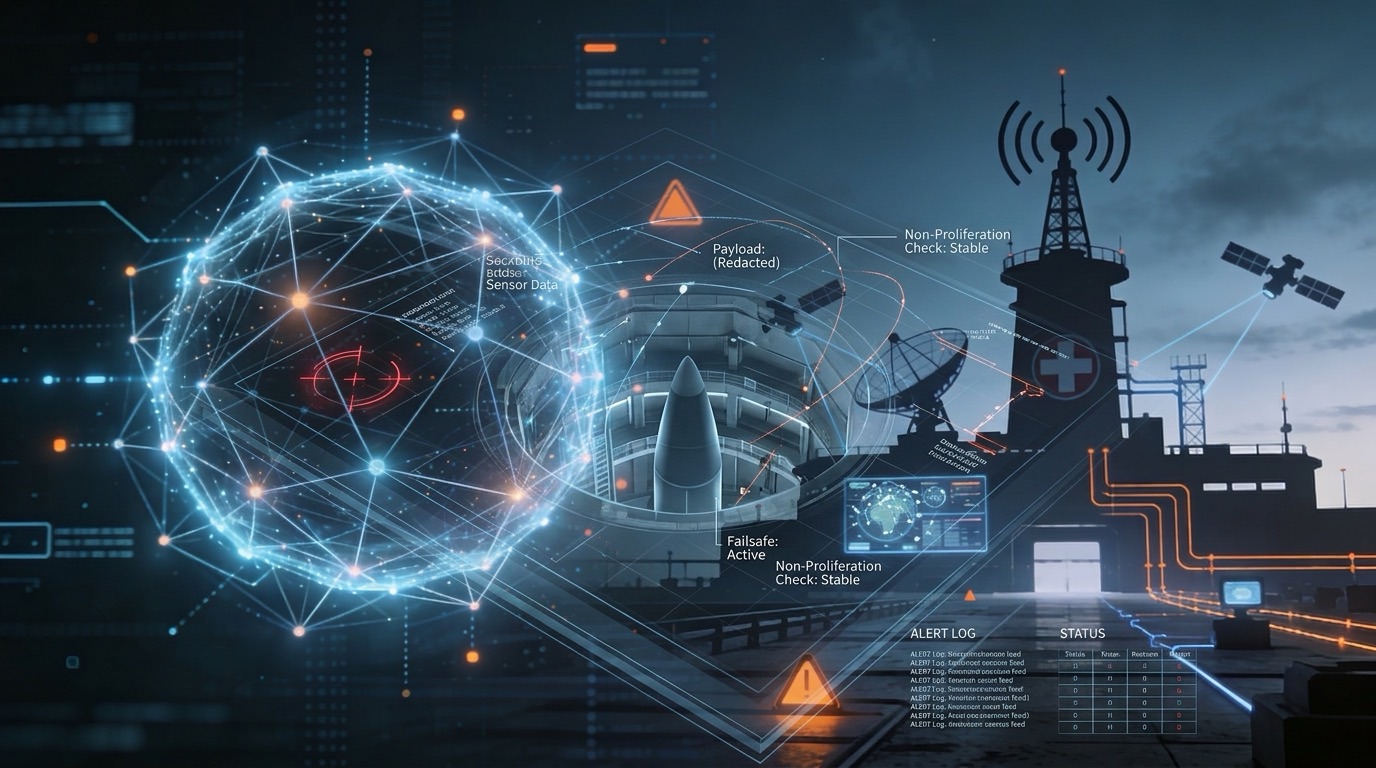
Artificial intelligence has moved from research labs into everyday products and now into the most sensitive parts of national security, including nuclear command and control systems. As major powers modernise their militaries, they are experimenting with artificial intelligence military systems that can sift vast data, track threats, and assist human decision‑makers in ways that were impossible a decade ago.
This raises a crucial question for technology and global security: does AI make nuclear war more or less likely? The answer is nuanced — AI can enhance early‑warning accuracy and reduce some human errors, but it can also compress decision timelines, create automation bias, and introduce new cyber vulnerabilities in nuclear command and control systems.
This guide for UnderstandTech.co.uk takes a balanced, non‑sensational look at how AI is being used in defence, where it intersects with nuclear weapons policy, how it differs from nuclear energy innovation, and what kinds of governance will matter most between now and 2035.
Don’t forget you can use our new AI chat tool to ask questions about any app and parental controls here: Understand Tech – Your Go-To for Digital Advice

Nuclear command, control and communications (often abbreviated as NC3) refers to the “system of systems” that lets political leaders and military commanders detect threats, communicate securely, and, if they choose, order the use of nuclear weapons. These architectures combine early‑warning sensors, fixed and mobile command centres, secure communication links, and procedures that are designed to be both highly resilient and tightly controlled.
Although basic automation has been present for decades, today’s nuclear command and control systems remain fundamentally human‑driven: humans interpret warning data, humans follow authorisation chains, and humans ultimately make any launch decisions. Historical near‑misses — such as the 1983 incident in which Soviet early‑warning software falsely indicated a US missile launch, and a human officer judged it to be an error — highlight why human reasoning is still treated as a critical safety layer.
In established nuclear‑armed states, nuclear use decisions are typically reserved for the highest political authorities, supported by senior military advisers and dedicated nuclear command staffs. Decision chains are designed with multiple checkpoints: intelligence and early‑warning data are fused and analysed, senior officials are briefed, alternative explanations (such as sensor malfunction) are considered, and only then would any launch authorisation be contemplated.
These chains aim to ensure that nuclear weapons are never launched accidentally or by unauthorised actors, but they also must function under intense time pressure if a state believes it faces an incoming attack. Some states maintain “launch‑on‑warning” postures, meaning they might decide to launch if sensors indicate a large incoming strike, before any detonations have occurred, which makes the quality and interpretation of early‑warning data especially critical.
Early‑warning systems fuse inputs from satellites, ground‑based radars, and other sensors to detect ballistic missile launches, track their trajectories, and estimate likely targets. Modern systems generate huge volumes of data that must be filtered for false alarms caused by atmospheric phenomena, technical glitches, or non‑threatening launches such as space rockets.
Machine learning and pattern‑recognition techniques are increasingly attractive in this space because they can scan high‑volume sensor feeds and highlight anomalous patterns far faster than human operators alone. However, the most critical decisions still depend on human judgment, both because of the stakes and because leaders are aware of well‑documented historical false positives in nuclear warning systems.
The “C” in NC3 — communications — covers hardened phone networks, radio links, satellite communications, and data networks that connect early‑warning sites, command centres, and nuclear forces. These channels are designed for survivability under attack and resilience against jamming, cyber intrusion, or physical disruption.
Redundancy is a central design principle: there are multiple pathways for messages, backup command posts, and pre‑planned procedures if parts of the network fail. Even as new digital technologies are introduced, nuclear‑related communications still rely heavily on isolated, highly controlled infrastructure to reduce exposure to the open internet and commercial networks.

AI is not being plugged directly into “red buttons” that autonomously launch nuclear weapons, and there is broad recognition that removing humans from the loop at that point would be dangerously destabilising. Instead, AI is entering nuclear‑relevant environments in more limited but still consequential ways: data analysis, pattern recognition, and decision support.
Importantly, a lot of military AI development that could affect nuclear stability is happening outside nuclear weapon systems themselves — for example in conventional targeting, missile defence, cyber operations, and space systems — but it can still influence nuclear escalation risk.
Machine learning models are increasingly used to sift through satellite imagery, radar tracks, and signals intelligence to identify potential missile launches, unusual troop movements, or changes in an adversary’s nuclear posture. These tools can detect correlations and subtle patterns — sometimes called “predictive forecasting” — that might signal preparation for a nuclear test or deployment before it becomes obvious by traditional analysis.
For example, AI systems can enhance early‑warning centres by processing more sensor streams in parallel, flagging anomalous activity, and providing confidence levels for potential threats. In theory, this could give leaders more time and better data to de‑escalate or verify what is happening, rather than relying on a small number of noisy indicators.
Beyond missile detection, AI‑enabled surveillance tools are being explored for monitoring nuclear facilities, tracking mobile launchers, or analysing open‑source data about nuclear programmes. Machine learning can tag objects in satellite imagery, classify vehicle types, and assess construction patterns that might indicate new nuclear‑related infrastructure.
This kind of analysis can support arms control verification and non‑proliferation efforts by making it easier to spot suspicious activity or cross‑check state declarations, but it can also feed into military targeting if AI is used to identify vulnerable elements of an adversary’s nuclear forces. That dual‑use nature is a recurring theme in AI and nuclear weapons debates.
Current public reporting indicates that AI in nuclear contexts is being used as decision support — systems that present information, projections, or recommendations to human operators rather than taking actions on their own. For instance, AI might aggregate diverse data streams, highlight inconsistencies, and suggest likely explanations (such as “sensor malfunction” versus “genuine missile launch”) with associated confidence scores.
However, there is concern that as these systems become more sophisticated and embedded, human decision‑makers may become over‑reliant on AI outputs, particularly in high‑stress, time‑compressed crises. Even without giving AI direct control, the way humans interpret and act on AI recommendations could subtly shift where real power lies in nuclear command and control systems.

Automation in nuclear‑relevant systems offers speed and consistency, but it can also create new failure modes that are harder to anticipate or control. The main concerns cluster around misinterpretation of data, false positives, escalation dynamics, and the trade‑off between speed and human judgment.
Many advanced AI models, especially deep neural networks, are “black boxes”: even their developers cannot easily explain why they produced a particular output. In a nuclear crisis, this opacity is a problem — commanders may see a confident AI assessment of an incoming attack without being able to interrogate the reasoning, which complicates verification and accountability.
AI systems can also generate highly confident but incorrect outputs — especially in situations with little historical training data, such as rare nuclear crisis scenarios. In the context of AI and nuclear weapons, a hallucinated detection of an incoming strike or misclassification of routine activity as hostile could intensify tensions if leaders treat AI outputs as authoritative.
False positives — alerts of an attack where none exists — have long been a concern in nuclear early‑warning systems, even without modern AI. Historical incidents driven by sensor glitches, misinterpreted exercises, or natural phenomena show how easily technical errors can look like strategic threats.
Integrating AI and large‑scale automation could compound this problem by adding new sources of error, such as biased training data or adversarial manipulation of inputs, while also making outputs appear more objective and trustworthy than they really are. If AI‑enabled systems speed up the move from detection to recommended response, leaders may have less time to cross‑check anomalies and more pressure to act quickly, increasing nuclear escalation risk.
Military planners are attracted to AI because it can process data faster than humans and support rapid decision‑making in multi‑domain conflicts. But in the nuclear realm, speed is a double‑edged sword: while faster detection is useful, faster escalation is dangerous.
The integration of artificial intelligence military systems — even those focused on conventional operations — can compress timelines in ways that spill over into nuclear decision‑making. For instance, if AI‑enabled conventional forces can quickly target an adversary’s nuclear assets, that adversary may feel its second‑strike capability is at risk and adopt more hair‑trigger postures, making miscalculations more likely.
Despite the risks, many experts argue that carefully constrained AI could actually enhance nuclear safety and reduce some pathways to nuclear war. The key is to use AI to support, not replace, human control and to focus on functions that clearly lower risk.
AI‑enhanced systems can combine satellite, radar, and other sensor data to produce more comprehensive and timely threat assessments. By filtering noise and highlighting genuinely suspicious patterns, they can reduce the odds that a real attack is missed or that benign activity is misinterpreted based on a single sensor glitch.
Decision‑support tools that quantify uncertainty and provide alternative hypotheses (“attack” versus “sensor error” versus “training exercise”) can help leaders avoid binary thinking under pressure. If designed to flag ambiguity rather than over‑confidently assert a single answer, AI could encourage more cautious deliberation in nuclear command and control systems.
Humans are susceptible to fatigue, cognitive biases, and stress‑induced errors, all of which are worrying in a nuclear control room. AI systems, especially rule‑based ones operating within narrow, well‑tested parameters, can provide consistent monitoring and cross‑checking that reduces the impact of individual human mistakes.
For example, AI can be used to flag inconsistent data entries, detect anomalies in maintenance logs, or ensure complex launch procedures cannot proceed if certain safety conditions are not met. When combined with robust training and a culture that treats AI as a fallible assistant rather than an oracle, this can enhance overall nuclear safety.
Beyond national systems, AI has potential in global monitoring for arms control, non‑proliferation, and transparency. Tools that automate the analysis of satellite images, shipping records, and open‑source information can help international institutions and independent researchers detect clandestine nuclear activities earlier.
Such capabilities could support verification of agreements, build confidence between states, and provide additional eyes on potential proliferation hotspots. In this sense, AI and nuclear weapons debates are not just about worst‑case warfighting scenarios but also about improving the information environment that underpins technology and global security.
Wherever digital systems are introduced into nuclear‑relevant environments, cybersecurity becomes a central concern. AI both depends on and expands this digital footprint, creating new attack surfaces that have to be protected against sophisticated cyber operations.
Cyber attacks could manipulate the information presented to nuclear decision‑makers or interfere with the operation of nuclear weapons themselves. For instance, an attacker might spoof sensor data to generate false indications of an incoming attack, corrupt AI training data to bias its outputs, or exploit software vulnerabilities in AI‑enabled command systems.
Because nuclear command and control systems are so complex and interconnected, even small compromises in one component can have outsized effects on situational awareness and trust. Securing this infrastructure requires not only technical measures — secure coding, rigorous testing, intrusion detection — but also organisational practices like red‑teaming and independent oversight of AI deployments.
Nuclear facilities and weapons systems are often described as “air‑gapped” or isolated from the public internet, which does reduce some AI cybersecurity risks. However, complete isolation is rarely achievable: data still has to be moved, software updated, and maintenance performed, all of which can introduce pathways for compromise.
Furthermore, AI components may be developed using commercial tools, open‑source libraries, or shared datasets before being integrated into more secure environments. This supply‑chain dimension means vulnerabilities discovered in widely used AI frameworks can have downstream effects even in systems that are otherwise tightly controlled.
On the positive side, AI is also being used to improve cybersecurity, including in critical infrastructure and defence networks. Machine learning systems can detect unusual patterns in network traffic, identify anomalous behaviour on devices, and support rapid incident response — functions that are increasingly important as attackers themselves adopt AI tools.
Used carefully, AI can therefore strengthen digital defences around nuclear‑relevant systems, but doing so safely requires rigorous validation, explainability where possible, and clear constraints on what automated defensive actions are allowed to take place without human approval.
Discussions about “nuclear risk” often blur two very different domains: nuclear weapons and nuclear energy. For a modern technology guide, it is important to distinguish between nuclear command and control systems associated with weapons, and civilian nuclear power systems that produce electricity and heat.
Nuclear power is currently one of the largest sources of low‑carbon electricity worldwide and accounts for a significant share of global clean electricity generation. Over 30 countries operate hundreds of nuclear reactors, and many others are exploring nuclear energy to meet climate and energy‑security goals.
Recent years have seen renewed interest in expanding nuclear capacity, with multiple states and organisations discussing goals such as tripling nuclear power by 2050 as part of decarbonisation strategies. This is part of the broader nuclear energy future in which reactors are paired with renewables and storage to provide firm, low‑carbon power.
Small Modular Reactors (SMRs) are a prominent innovation in the nuclear energy space. Generally defined as reactors with up to about 300 megawatts electric capacity — roughly one‑third the size of traditional large reactors — SMRs are designed to be factory‑manufactured in modules and then transported to sites for installation.
International bodies such as the IAEA note that SMRs could offer flexible power for smaller grids, remote regions, and industrial applications, with potential benefits including inherent or passive safety features, shorter construction times, and new financing models. Multiple SMR designs are under development worldwide, and some are expected to reach commercial operation around 2030 if regulatory and economic hurdles are addressed.
From a technology and global security perspective, the nuclear energy future — especially with SMRs — matters because it can help reduce dependence on fossil fuels and thus mitigate climate‑related security risks such as resource conflicts or extreme‑weather disruptions. However, the expansion of civilian nuclear power also requires strong safeguards, regulatory oversight, and cybersecurity to prevent proliferation, sabotage, or other misuse.
AI plays a different role here than in nuclear weapons: it can support reactor monitoring, predictive maintenance, grid integration, and safety analysis rather than launch decisions. Keeping the discussion clear about these distinct functions is important to avoid conflating nuclear energy innovation with nuclear weapons policy.
Managing the intersection of AI and nuclear systems is not just a technical task; it is also a governance challenge that spans arms control, international law, and emerging AI regulation. While no single comprehensive treaty addresses AI in nuclear command and control systems, existing nuclear regimes and new AI governance efforts provide starting points.
International institutions such as the International Atomic Energy Agency (IAEA) oversee safeguards and security standards for civilian nuclear facilities, including reactor safety, emergency planning, and protection against theft or sabotage of nuclear material. These frameworks are now beginning to consider how digitalisation and new technologies, including AI, affect safety and security requirements.
On the weapons side, various arms control and confidence‑building arrangements — along with long‑standing norms against the use of nuclear weapons — shape how states think about nuclear posture, transparency, and crisis communication. As AI is integrated into military systems, there is growing discussion about updating these regimes to address issues like automated early warning, AI‑driven targeting, and cyber risks to NC3.
Integrating AI into nuclear‑relevant systems requires specific risk‑assessment frameworks and guardrails. Proposals include mandatory testing and validation in realistic scenarios, transparency measures among major powers about where AI is and is not used in nuclear command and control systems, and shared principles that prohibit fully autonomous nuclear launch.
More broadly, international debates about AI ethics and regulation — covering topics like transparency, accountability, and human oversight in high‑risk applications — are directly relevant to the nuclear context. As states craft AI strategies for their militaries, the challenge will be ensuring that commitments to meaningful human control are not eroded by the allure of speed and automation in crisis situations.
Across the literature, one theme stands out: the importance of “human‑in‑the‑loop” or “human‑on‑the‑loop” control, particularly for weapons of mass destruction. This means humans should retain the authority to approve or veto any use of force, with AI confined to advisory and support roles rather than independent decision‑making.
Strategic‑stability analyses caution that even this principle is not enough on its own; there must also be safeguards against automation bias (over‑trusting AI), robust training for operators, and institutional cultures that encourage questioning AI outputs. Otherwise, there is a risk of drifting towards de facto autonomy even if formal doctrine insists on human control.
Looking ahead to roughly the next decade, AI will almost certainly play a larger role across militaries, including in domains that intersect with nuclear risk, while civilian nuclear energy is likely to expand as part of clean‑energy transitions. The balance between risk and safety will depend heavily on governance choices made now.
Major powers are already exploring new technologies, techniques, and methods to modernise their NC3 architectures, with AI identified as a key enabler for early warning, decision support, and predictive analytics. In parallel, AI‑enhanced conventional systems — long‑range strike, missile defence, cyber operations, and space assets — are expected to become more capable and autonomous.
This trend suggests that by the early 2030s, much of the information flow into nuclear command centres will have passed through AI filters or analytics at some stage. The question is whether these tools will be implemented with conservative safety margins and transparency, or pushed aggressively for competitive advantage without fully understanding their failure modes.
On the governance side, expert communities are pushing for clearer norms and potentially formal agreements around AI in nuclear contexts, including declarations against autonomous nuclear use and commitments to maintain human‑in‑the‑loop control for any nuclear‑related decisions. There is also interest in confidence‑building measures such as sharing best practices for AI testing, or establishing crisis communication channels specifically for AI‑related incidents or misunderstandings.
Domestically, many states are exploring AI risk‑classification schemes and regulatory frameworks that treat military and critical‑infrastructure applications as “high risk,” requiring stringent oversight and review. How these national approaches converge or diverge will influence the global risk profile of AI and nuclear weapons.
Given the extreme stakes and broad expert consensus, it is likely that at least in official doctrine, nuclear decision‑making will remain human‑in‑the‑loop through 2035. The more subtle challenge will be ensuring that humans have meaningful time, information, and authority to exercise that control, rather than becoming rubber‑stamps for AI‑accelerated escalation paths.
If states prioritise resilience, transparency, and safety in AI deployments — focusing on error‑reduction, verification, and defensive applications — AI could help stabilise nuclear relations by reducing misperceptions and improving crisis management. If they instead prioritise speed, opacity, and unilateral advantage, AI could erode strategic stability and make nuclear war more likely by accident or miscalculation.
AI and nuclear weapons form a high‑stakes intersection where the promises of smarter detection and decision‑support sit alongside real risks of compressed timelines, opaque errors, and new cyber vulnerabilities. Today, AI is not autonomously launching missiles, but it is increasingly embedded in nuclear command and control systems and the broader military environment that shapes nuclear escalation risk.
In parallel, AI is helping to advance the nuclear energy future — particularly through better monitoring and the development of Small Modular Reactors (SMRs) — which can contribute to climate and energy security if carefully governed. Whether AI ultimately increases or decreases the risk of nuclear war will depend less on the technology itself and more on how states manage human oversight, cybersecurity, transparency, and international norms over the next decade.
For readers of UnderstandTech.co.uk, the key takeaway is that AI in nuclear contexts is neither inherently apocalyptic nor automatically reassuring; it is a powerful tool whose impact on technology and global security will be determined by design choices, governance frameworks, and a sustained commitment to keeping humans in meaningful control.