
F1 2026 Rules: The Technology and Engineering Behind the Changes Explained
Introduction: A New Era of Formula 1 Technology
The 2026 Formula 1 season marks a pivotal moment in motorsport history. Far beyond simple rule adjustments, the upcoming regulations represent a fundamental reimagining of what powers a racing car and how engineers approach performance, sustainability, and efficiency. For tech enthusiasts and engineering professionals, 2026 isn’t just about faster lap times—it’s about witnessing cutting-edge innovation that will influence road-car technology, energy systems, and sustainable fuel development for decades to come.
This article breaks down the technology, engineering implications, and real-world impact of F1’s 2026 rule changes. Whether you’re passionate about hybrid systems, aerodynamic design, or the future of sustainable fuel, you’ll find a comprehensive guide to understanding what makes 2026 such a pivotal year for Formula 1.
What Are the F1 2026 Rules Changes? A Complete Overview
The FIA (International Automobile Federation) has introduced sweeping changes to F1 regulations for 2026, touching nearly every aspect of car design and performance. These changes were designed with three core objectives in mind: promoting sustainability, encouraging technological innovation, and maintaining competitive balance across all teams.
The most significant change involves the power unit regulations. Rather than the current 1.6-litre V6 hybrid format that has dominated since 2014, 2026 introduces a new power unit philosophy that dramatically increases the electrical component’s role while maintaining combustion engine technology. This shift reflects the global automotive industry’s move toward electrification and sustainable energy.
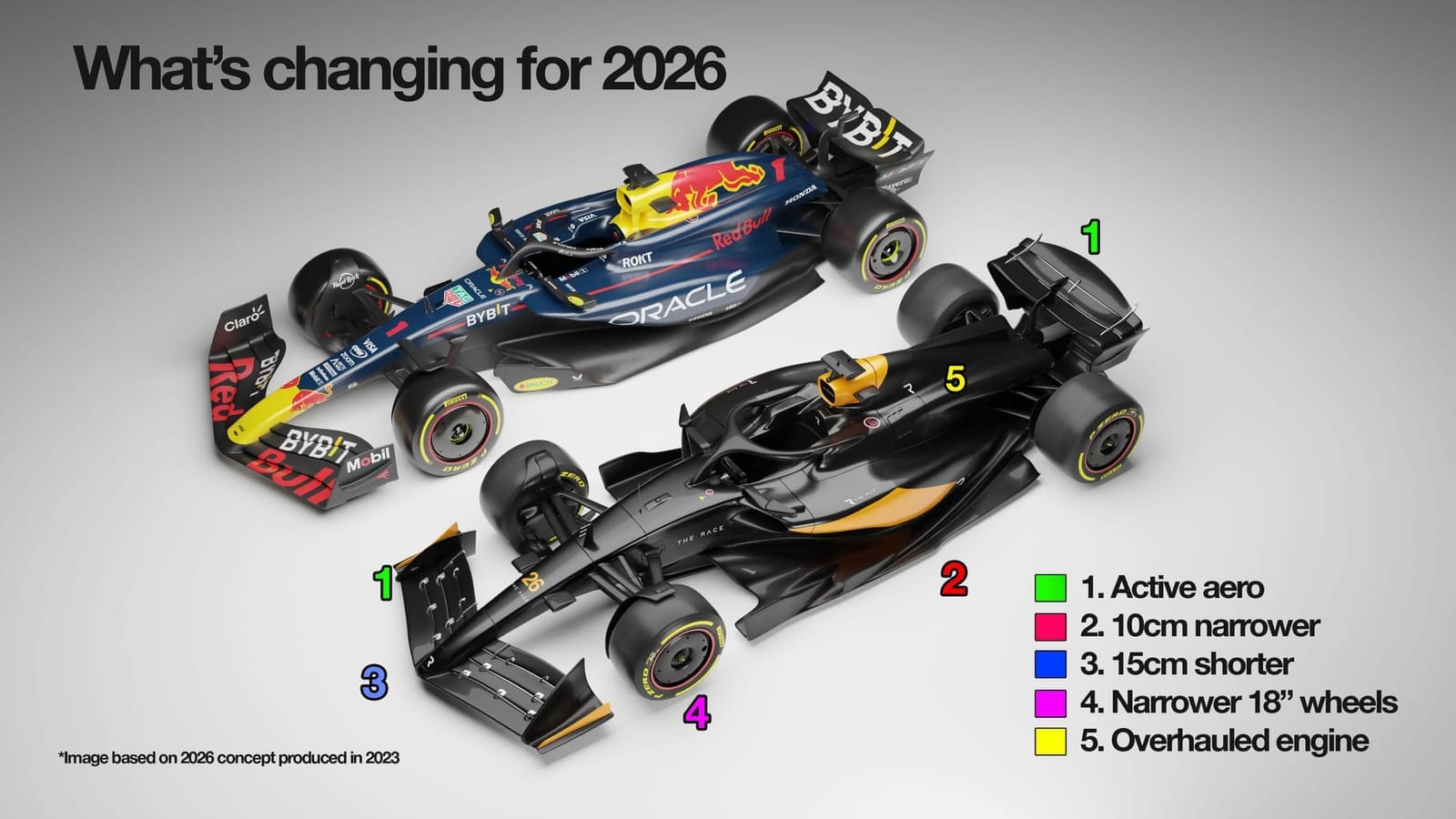
Additionally, the aerodynamic regulations have been revised to accommodate new power unit packaging, reduce downforce in strategic areas to improve racing, and maintain safety standards. Chassis regulations have also evolved, with teams facing new constraints on vehicle weight, centre of gravity, and structural designs to support the new power units.
F1 2026 Power Unit Regulations: Hybrid and Sustainable Fuel Technology
The Hybrid Revolution: Electricity Takes Centre Stage
The most transformative aspect of the 2026 rules involves the power unit itself. The new generation of F1 power units will feature a significantly larger electrical component compared to today’s engines. This isn’t simply about adding more electric motors—it’s a complete architectural redesign of how a race car generates and manages power.
In the current 2014-2025 regulations, the hybrid system consists of two motor-generator units (MGUs): the Motor-Generator Unit-Kinetic (MGU-K), which recovers energy from braking, and the Motor-Generator Unit-Heat (MGU-H), which recovers waste heat from the turbocharger. These systems contribute approximately 160 horsepower to the total power output of around 1,050 horsepower.
The 2026 regulations increase the electrical power output dramatically. Teams will have substantially larger battery packs and more powerful electric motors capable of delivering increased electrical contribution throughout the race. This means that electrical power will account for a much higher percentage of total power output, pushing hybrid technology toward true dual-power operation rather than supplementary assistance.
This architectural change requires entirely new approaches to:
- Battery management: Teams must develop advanced thermal management systems to keep batteries at optimal operating temperatures while delivering unprecedented power.
- Energy harvesting: New MGU configurations will recover energy more efficiently from both kinetic sources (braking) and thermal sources (exhaust heat).
- Electrical architecture: The increased electrical demand necessitates redesigned wiring harnesses, power distribution systems, and electronic control units capable of managing megawatts of electrical power.
Sustainable Fuel: A Game-Changer for Racing and Road Cars
Perhaps equally significant is the mandatory shift toward sustainable fuels in 2026. F1 will require all teams to use fully sustainable, carbon-neutral fuels produced from renewable sources. This is a landmark moment for motorsport—the sport that symbolizes high performance and excess is committing to environmental responsibility.
Sustainable fuels in F1 2026 will be synthetically produced using renewable electricity and captured carbon dioxide. These e-fuels (or e-petrol) are chemically similar to conventional petrol but have a dramatically lower carbon footprint. The exciting part for technology enthusiasts is that developing ultra-high-performance sustainable fuel suitable for F1 engines will accelerate road-car adoption of similar fuels, creating a technology transfer that benefits the entire automotive industry.
The engineering challenge is immense. F1 engines must produce over 1,000 horsepower reliably from these sustainable fuels while maintaining efficiency and durability across 23 race weekends per season. This requires:
- Advanced combustion optimization: Engine mapping and fuel injection strategies refined to extract maximum performance from sustainable fuel chemistry.
- Materials science innovation: Engine internals must withstand combustion characteristics of new fuels while maintaining reliability.
- Supply chain development: Fuel suppliers must scale production of sustainable fuels to meet F1’s demanding specifications while maintaining consistent quality across the season.
Aerodynamic Changes in F1 2026: Engineering for Performance and Racing
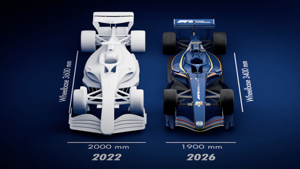
Aerodynamic regulations for 2026 have been revised significantly, primarily to accommodate the new power unit packaging while maintaining racing quality and safety. These changes represent some of the most interesting engineering challenges teams will face.
Frontwing and Rear Wing Modifications
The frontwing and rear wing designs have been adjusted to reduce overall downforce levels. This deliberate reduction serves multiple purposes. First, it prevents cars from becoming excessively difficult to drive—lower downforce makes cars more nimble and responsive to driver input. Second, it encourages closer racing by making it easier for trailing drivers to follow without suffering massive aerodynamic disadvantage.
Interestingly, the decrease in downforce isn’t uniform across all speed ranges. The regulations maintain high downforce in low-speed corners where driver skill and car balance matter most, while reducing it on straights where top speed is determined. This nuanced approach keeps racing competitive while rewarding engineering excellence.
Sidepod and Chassis Aerodynamics
The sidepods—the bodywork sections alongside the cockpit—have undergone significant changes to accommodate the larger power units and battery systems. This forces teams to innovate in how they manage airflow around increasingly complex packaging. Where previous generations used sidepods primarily for engine cooling and aesthetic purposes, 2026 sidepods become integral aerodynamic components that must efficiently manage air around larger electrical systems.
The floor regulations have also been revised, with changes to how teams can shape the underside of the car. These modifications aim to reduce complexity while maintaining performance, theoretically making aerodynamics more accessible to smaller teams and preventing a runaway advantage for well-resourced organizations.
Active Aerodynamics and DRS Evolution
The Drag Reduction System (DRS) has been refined for 2026. DRS allows trailing drivers to open their rear wing flap on straights, reducing drag and aiding overtaking. The 2026 rules expand DRS deployment zones on certain circuits to encourage more overtaking opportunities. Additionally, there’s increased flexibility in how teams can design their DRS mechanisms, potentially allowing for more innovative solutions.
Some technical proposals include expanded use of active aerodynamics—components that change shape during the race to optimize for different conditions. While currently limited, the 2026 regulations may permit more extensive active aero, provided it meets safety standards and cost control measures.
Data, Simulation, and AI in F1 2026: The Digital Revolution
Beyond physical components, F1 2026 represents a revolution in how teams develop and optimize performance through software, artificial intelligence, and advanced simulation.
Computational Fluid Dynamics at New Heights
Teams use Computational Fluid Dynamics (CFD) extensively to design aerodynamic components. The 2026 regulations allow increased CFD computational budgets—essentially permitting teams to run more detailed simulations. This might seem counterintuitive if the goal is cost control, but the rationale is that simulation-based development is more cost-effective than physical wind tunnel testing and prototype manufacturing.
With larger computational budgets, teams can simulate the complex interaction between new power unit packaging and aerodynamic performance more thoroughly. This accelerates development cycles and allows smaller teams with limited wind tunnel access to compete more effectively through superior simulation and analysis.
AI-Driven Performance Optimization
Artificial intelligence is increasingly central to modern F1. In 2026, AI systems will help teams:
- Optimize energy deployment: AI algorithms determine optimal moments to deploy electrical power during races, balancing immediate performance gain against energy conservation for race-long strategy.
- Tire management: Machine learning models predict tire degradation and optimal lap strategies based on track conditions, competitor positions, and remaining race distance.
- Real-time telemetry analysis: AI processes thousands of data points per lap, identifying performance bottlenecks and suggesting aerodynamic or mechanical adjustments.
Digital Twin Technology
Teams increasingly create digital twins—virtual replicas of their F1 cars that simulate performance under various conditions. In 2026, digital twins become even more sophisticated, incorporating weather simulation, tire wear prediction, and fuel consumption modeling. Engineers can run thousands of virtual races, testing different strategies and setups before the car even takes to the track.
How F1 2026 Tech Influences Road Car Innovation
One of the most compelling aspects of F1 2026 rules is the technology transfer to road cars. The sustainable fuel development alone will accelerate the automotive industry’s transition to carbon-neutral transportation.
Hybrid and Electric Powertrain Evolution
The advances in hybrid power management systems developed in F1 will influence road-car hybrid and electric vehicle design. Battery thermal management techniques perfected in racing—where cars operate at extreme temperatures and power levels—directly transfer to consumer EV development. Likewise, energy recovery systems refined for F1 will improve efficiency in road-car regenerative braking systems.
Sustainable Fuel Development
The most immediate impact is sustainable fuel development. F1’s commitment to e-fuels validates the technology for the broader automotive industry. Companies like Porsche, which supplies F1 engines, are simultaneously developing sustainable fuels for consumer vehicles. The rigorous testing and development conducted for F1 accelerates this process and demonstrates viability to regulators and consumers.
Materials and Manufacturing
The extreme demands of F1 engineering push materials science forward. Carbon fiber composite techniques, lightweight alloys, and thermal-resistant materials developed for race cars eventually find their way into production vehicles. Similarly, manufacturing processes refined for F1 components become cost-effective for consumer application.
F1 2026 Calendar and Race Format Changes
The 2026 F1 calendar features updated circuits designed to showcase the new regulations effectively.

Several circuits have received track modifications to better suit the new power unit characteristics and aerodynamic regulations. These changes include revised DRS zones, adjusted run-off areas for safety, and in some cases, resurfaced sections to provide consistent grip levels. Track engineers worked closely with the FIA and teams to ensure that 2026 cars can safely and competitively race at every venue.
The calendar itself remains relatively stable with familiar circuits like Monaco, Silverstone, and Monza, but also includes opportunities for new venues to join the championship as promoters prepare facilities to meet 2026 technical requirements.
Power Unit Development Timeline and Manufacturer Commitment
Multiple manufacturers are committed to competing in F1 2026 with new power units. Porsche, Audi, Ford, and others are investing billions in engine development. The commitment from manufacturers reflects confidence in F1’s direction and the technology’s viability.
Development timelines are crucial. Manufacturers must complete extensive testing and homologation (official certification) before the 2026 season begins. This involves:
- Dyno testing (testing engines on specialized equipment in laboratories)
- Simulator validation (testing engine performance models virtually)
- Prototype car testing (validation on actual F1 cars at designated test venues)
- Official FIA homologation (final certification ensuring rules compliance)
Teams are working simultaneously on chassis development, ensuring that new cars can safely and reliably integrate these power units while meeting all aerodynamic and structural requirements.
The Cost and Competitive Impact of 2026 Rules
The 2026 regulations were designed with cost control in mind, though inevitably, new regulations require significant investment from teams and manufacturers.
Budget Cap Implications
The Financial Regulations (cost cap) limit how much teams can spend on research, development, and operations. For 2026, the cost cap remains relevant, but power unit development—conducted by manufacturers rather than teams—falls outside the cap. This creates an interesting dynamic where manufacturers can invest heavily in engine development without directly affecting team budgets.
This structure aims to prevent the scenario seen in previous regulations where only wealthy manufacturers could afford competitive engine development, creating a two-tier system of have and have-not teams.
Leveling the Playing Field
The regulations include measures to help smaller teams access competitive power units. Manufacturers are encouraged to supply engines to customer teams at reasonable costs, and the FIA has implemented rules requiring engines to be made available to any team requesting them at a standardized price point.
The simplified aerodynamic regulations and increased simulation budgets also help smaller teams compete through superior engineering rather than sheer financial advantage alone.
Common Questions About F1 2026 Rules
The Road Ahead: F1 2026 and Beyond
The 2026 regulations represent more than rule changes—they embody motorsport’s commitment to sustainability, innovation, and technological excellence. As the sport moves forward, fans, engineers, and technology enthusiasts have unprecedented opportunities to witness engineering at its finest.
The intersection of high-performance racing, sustainable technology, and artificial intelligence creates a laboratory for innovation that benefits everyone. Technologies proven in F1 in 2026 will appear in consumer vehicles within five to ten years, making motorsport a genuine accelerant for technological progress.
For Understand Tech readers, 2026 promises compelling stories about battery technology, sustainable fuels, AI optimization, aerodynamic innovation, and the complex engineering required to push performance boundaries while maintaining environmental responsibility. The rules represent not a retreat from speed and performance, but an evolution toward a more sustainable, intelligent form of competition.
Conclusion: Why F1 2026 Matters Beyond Racing
The 2026 Formula 1 season marks an inflection point in automotive technology and sustainability. The combination of advanced hybrid systems, sustainable fuels, AI-driven optimization, and aerodynamic innovation creates a unique engineering challenge that will drive technological progress across the entire industry.
For those passionate about technology, engineering, and innovation, 2026 offers a front-row seat to the future. The cars that race in 2026 will represent the pinnacle of what’s possible when engineering excellence combines with environmental responsibility.
Key Takeaways
- The 2026 F1 power units represent a dramatic shift toward electrification, with electrical systems accounting for significantly more power than current regulations.
- Sustainable, carbon-neutral fuels become mandatory, accelerating technology transfer to road-car development.
- Aerodynamic changes reduce overall downforce while improving racing quality and safety.
- AI and simulation become central to team strategy and car development.
- Technology developed for 2026 F1 will influence consumer vehicles and energy systems for decades.
- Multiple manufacturers are committed to 2026, indicating strong industry confidence in the regulations.
- Cost controls and simplified regulations aim to maintain competitive balance across all teams.